At a recent all-hands, my colleague Kazu shared an analogy between a project going up in flames and the Sherpas on Everest. His point was roughly this: a software project is a lot like climbing Everest, so maybe what we need is the authority and the culture for a Sherpa to turn the party around the moment they sense danger.
I knew almost nothing about Sherpas, so I mostly just nodded along. But the story of the Sherpa on Everest turns out to be a well-known piece of received wisdom, and I got curious enough to dig into it.
What I found was that this received wisdom is a far more idealized story than I had assumed. In practice, Sherpas do not actually hold the authority to stop a client from doing something reckless.
So let me trace the history of the Sherpa, and think about where it really overlaps with a project on fire.
Remembering a Project on Fire
Kazu's starting point was his own experience as the manager who shipped a particular service. After release, worst-case incidents hit all at once, and defects surfaced that each could have been fatal on their own.
"Clearing a big blocker looks like it should make you happy, but more often than not the next blocker was just hiding behind it."
Put out the fire in front of you, and another one is already smoldering behind it. Repeat that enough times and you find yourself somewhere you can no longer back out of. That is how a project burns. I suspect plenty of people recognize the feeling.
Looking back, Kazu said they should have stopped and reset. But at the time, the release calendar had already been committed to stakeholders, and pausing was not an option anyone could pick up easily. On top of that, he had not yet articulated his own responsibilities and stance as a manager. At the moment he should have called a halt, he had no written-down reason and no written-down authority to do it. That was his regret.
That structure — should have stopped, couldn't stop — is what mapped onto the Sherpa story for him.
The Sherpa as Specialist
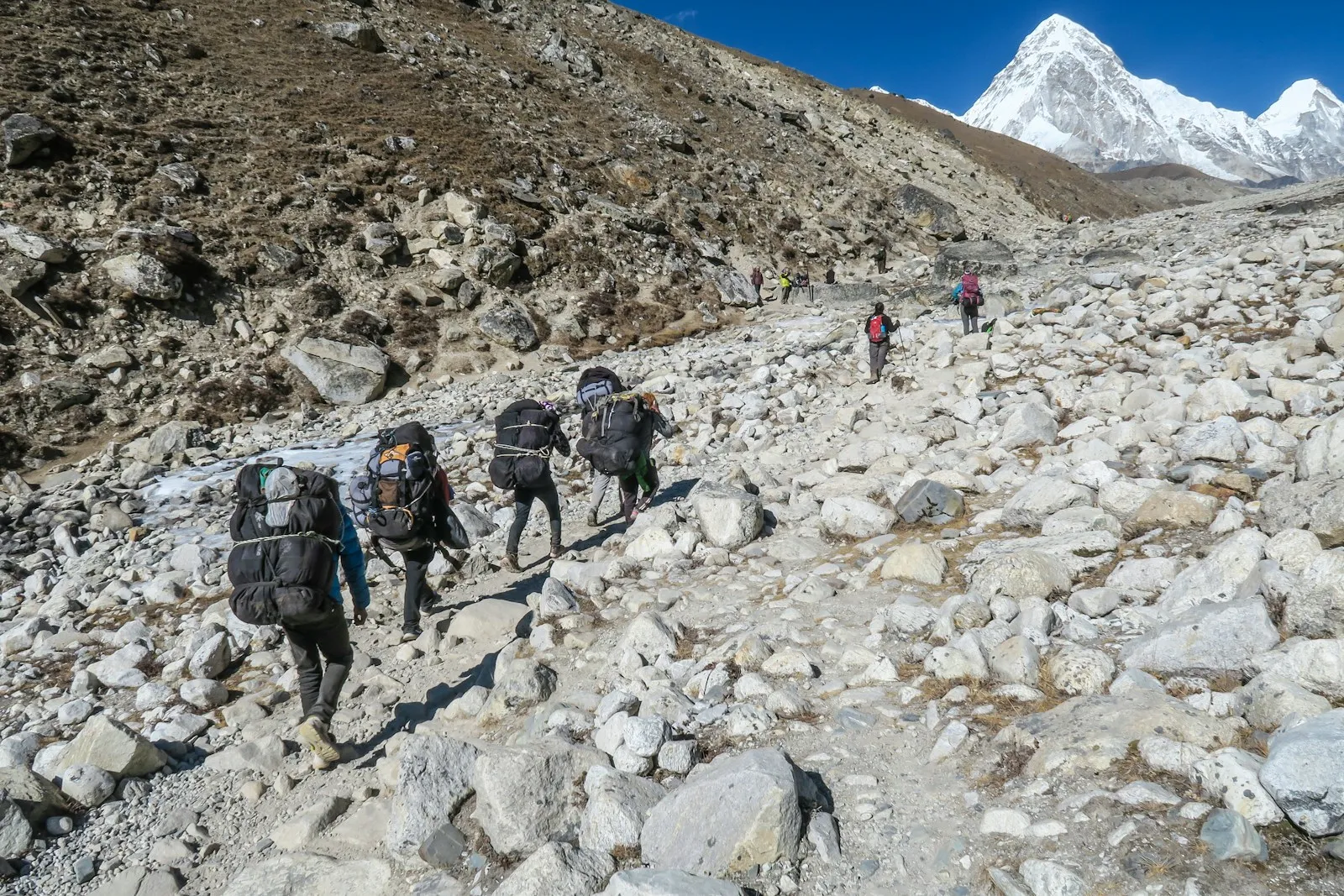
So who are the Sherpa, exactly?
The Sherpa are an ethnic group who migrated from eastern Tibet into Nepal's Solu-Khumbu region sometime around the 12th to 15th centuries. The name itself is said to come from the Tibetan for "people of the east."
Their population today is over 250,000 (EBSCO).
The most famous Sherpa in Everest's climbing history is Tenzing Norgay, who in 1953 made the first ascent of Everest alongside Edmund Hillary (Follow Alice). From that point on, Sherpas came to be known not as porters but as a body of specialists whose skills make summits possible.
What I find interesting is that Sherpa performance at altitude can't be fully explained by acclimatization or experience alone.
Sherpas carry variants in genes such as EPAS1 and EGLN1, and their metabolism works differently from that of lowland populations.
One well-known side effect of altitude acclimatization is that hemoglobin concentration rises excessively and the blood thickens. Research suggests this happens far less in Sherpas (PLOS One, PNAS).
It isn't only accumulated culture. Their bodies themselves are built for altitude. That adaptation, however, does nothing to protect anyone from avalanches or falling ice. Being physically strong and being safe are entirely different things.
There's another specialist role that gets far less attention: the Icefall Doctors. Directly above Everest Base Camp sits the Khumbu Icefall, a collapsing section of glacier roughly 1.5km across horizontally with 600m of vertical gain. The ice keeps moving about a meter a day, so there is no such thing as a fixed safe route (Wikipedia: Khumbu Icefall).
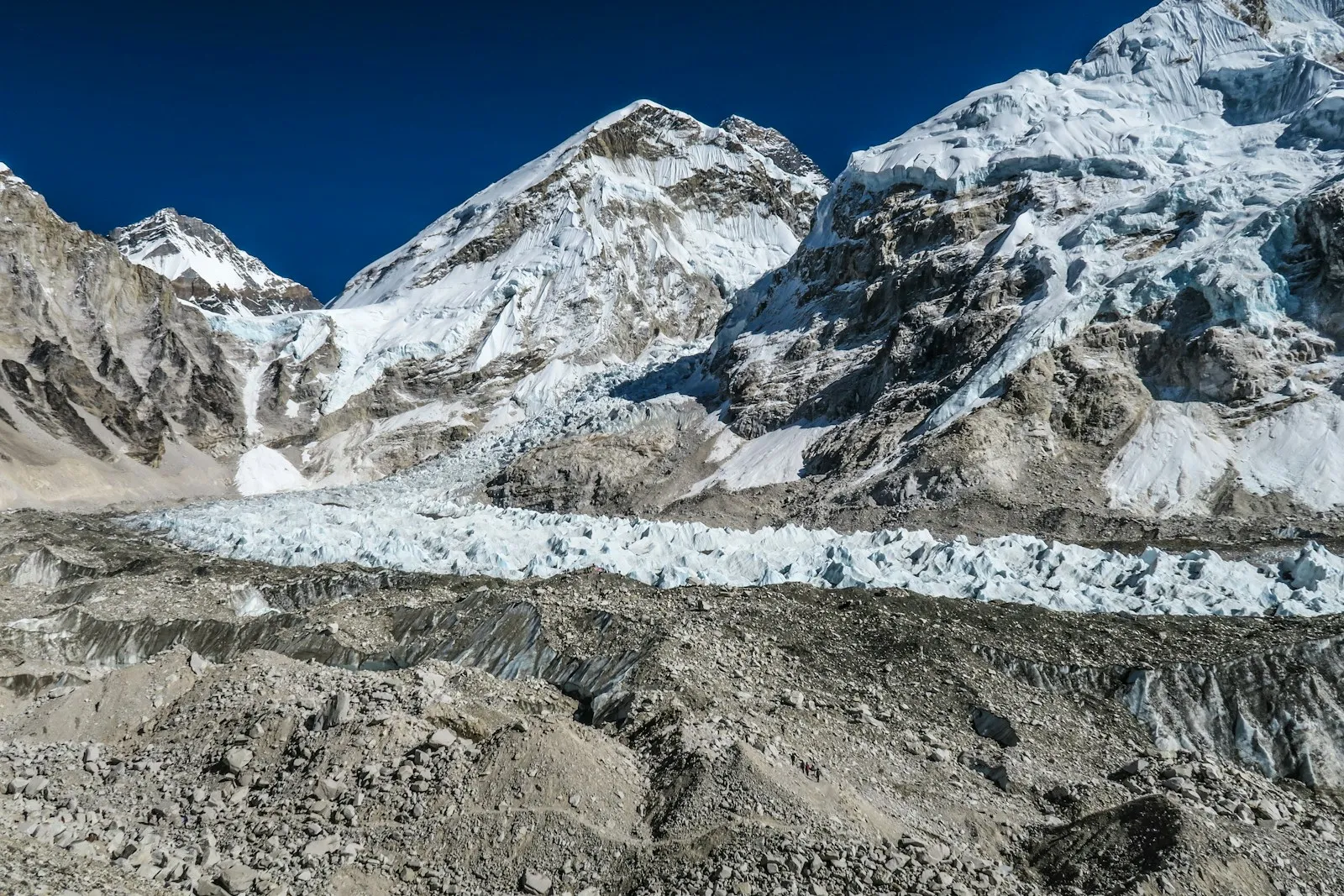
Every year before the spring season opens, the Icefall Doctors go into that unstable maze of ice to place ladders and fixed ropes and cut a route through it. Which sounds genuinely life-threatening.
Since 2003 the work has been run by the SPCC (Sagarmatha Pollution Control Committee), a local organization (Outside). The call on how to route through the danger zone is made at the level of an organization, not an individual.
The shape of the route itself is worth noting too. On the Nepal side, the southeast ridge strings its hazards together like beads: clear the Khumbu Icefall and you reach the Lhotse Face, then the South Col, then the Hillary Step. It is not built so that getting past one thing makes the rest easier.
And according to an analysis based on the Himalayan Database covering 1922 to 2023, 56% of deaths on the mountain occur during the descent (Journal of Physiology). The dangerous part isn't the moment you stand on the summit — it's the way back down, once your oxygen and your strength are both spent. The same structure shows up here: relief at having cleared one obstacle dulls your guard against the next move.
Seen this way, the Sherpa are not auxiliary staff. They are a body of specialists supported by several layers at once:
- Genetic adaptation
- Accumulated technical skill
- Operation by a specialist organization
Which is exactly why "safety decisions should be delegated to the Sherpa" sounds, at first pass, like a reasonable argument.
Commercialization and the 1996 Disaster
That expertise met the wave of commercialization in the 1990s.
Over that decade, commercially guided expeditions on Everest came into their own.
The emblematic operators were Rob Hall's Adventure Consultants and Scott Fischer's Mountain Madness. Both were establishing the same business model: take relatively inexperienced, wealthy clients to the summit with a team of professional guides and Sherpas.
The price has been consistently steep from the start. In 1996, Rob Hall charged $65,000 per person (Wikipedia: Rob Hall). Even today, the median for an international operator with a Sherpa guide sits around $54,000, and the climbing permit alone runs $15,000 (Climbing.com).
Which means there are clients willing to pay that much just to get to Base Camp.
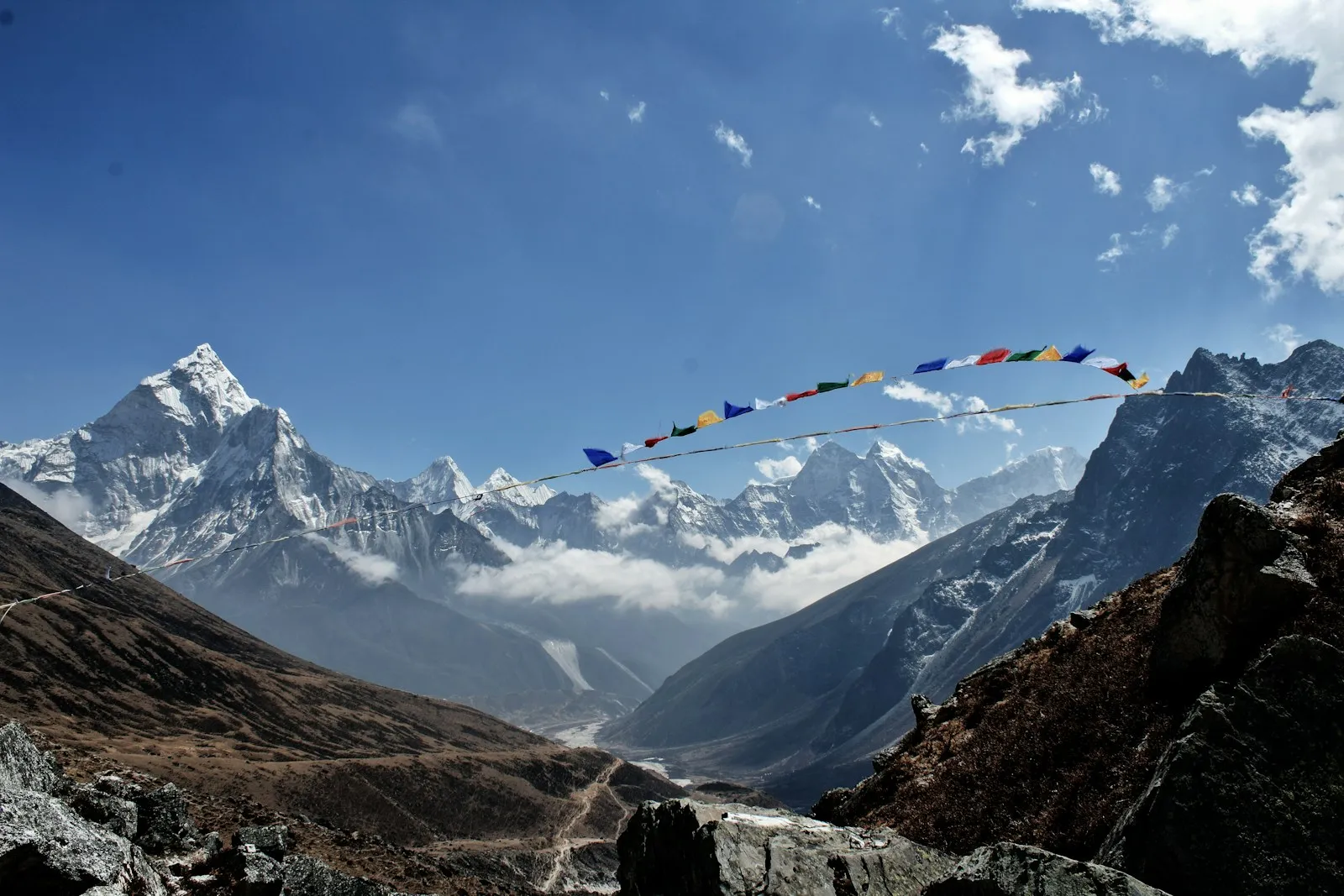
On May 10 and 11, 1996, bad weather hit Everest and eight people died. Among them were Rob Hall himself, the guide Andy Harris, the client Doug Hansen, and the Japanese climber Yasuko Namba (Wikipedia).
Hall had set a turnaround time in advance — a safety rule stating that once the appointed hour passed, you turn back whether or not you've reached the summit. He is reported to have described it as an absolute law that admitted no argument.
On the day itself, the turnaround time was not enforced.
Scott Fischer summited at 3:45pm, and Hall and Hansen later still. (Sources disagree on the turnaround time itself, giving it variously as 1pm or 2pm. Advnture)
Two primary accounts of the disaster survive, and they contradict each other.
- Into Thin Air, by Jon Krakauer, a journalist who came back alive
- The Climb, by Anatoli Boukreev, a guide on the same expedition
One phrase appears in both books: summit fever. It describes the psychological state in which fixation on the summit grows strong enough that you ignore the signals telling you it's dangerous.
A rule that had been set was one the person who set it could not enforce in the field. The 1996 disaster is still told as the textbook case.
So what were the Sherpas doing at the time?
Ang Dorje, the sirdar of Hall's team, was responsible for fixing the ropes up to the summit.
On the day, Lopsang Jangbu of Fischer's team — who was supposed to be fixing them with him — ended up short-roping a client up the mountain instead.
Ang Dorje refused to do the work alone, and the expedition is said to have been delayed by roughly an hour as a result (Ang Dorje Sherpa, Britannica).
Lopsang, for his part, spent more than five hours trying to bring an immobilized Fischer down by himself. He reportedly refused to leave until Fischer had repeatedly ordered him to descend (Lopsang Jangbu Sherpa).
In other words, the Sherpas were not on the side that decided whether to climb or stop. They were on the side that absorbed those decisions with their own bodies. Far less "the absolute norm that halts the climb," far more "the last balancing of the books after things have already broken."
I suspect the way Sherpas are paid accelerated this too.
Sherpa pay varies by role, but industry estimates put it at roughly $2,000 to $10,000 for a season (IERE).
Given that Nepal's GDP per capita is in the $1,300 range (Macrotrends), that's decent money. But it also means writing off a season lands directly on your household finances, which creates a strong incentive to somehow get through and collect the pay.
The people who understand the danger best were the ones with the least room to call off a climb.
Do Sherpas Really Hold the Authority to Stop?
The conclusion first: the authority itself appears to have fallen into a state where it doesn't function. There are two big pieces to this.
- First, the decision was never handed to Sherpas in the first place
- Second, even the side that does hold the decision can't exercise it
The second one is the nastier problem.
The commonly told version goes like this. After 1996 and the accidents that followed, Everest climbing came to put "coming back alive" ahead of "getting to the top," and a culture grew in which a Sherpa who judges a situation dangerous can propose turning back as a professional. Kazu's analogy was probably built on this version.
The more I read, though, the more idealized it looks — and the further from reality.
An analysis by the climbing outlet Explorersweb states that Sherpa guides advise on whether to continue but hold no authority (Explorersweb). The final decision, more often than not, gets left with the client.
The case that analysis examines is an accident in May 2024. Nawang Sherpa, accompanying a Kenyan climber attempting the summit without supplemental oxygen, kept radioing Base Camp: the client had been behaving irrationally for two to three hours, was refusing advice, was pushing him away, and an attempt to get him onto emergency oxygen had failed. Both men died (CNN).
The ability to advise is there. The danger is visible. It is being communicated. And the client still doesn't stop. That's the reality.
The relationship between the two sides hasn't always rested on calm trust, either. In 2013 there was an incident in which three Western climbers clashed with around a hundred Sherpas (NPR).
Part of the background is sheer volume. In the 1950s, fewer than 20 people had summited Everest in total; by 2019, 877 people summited in a single year (Alan Arnette: Everest by the Numbers).
There is no way the supply of experienced, veteran Sherpas grew at the same pace as that demand. For a large expedition company, "getting the client to the top" is likely to become the commercial priority ahead of putting client safety first.
The reason an institution like the turnaround time got neutered looks less like weak willpower on the part of whoever held the authority, and more like something on the structural side.
Regulation has been moving, too. In February 2025 the Nepali government revised its climbing rules, banning solo ascents on 8,000m peaks and requiring one guide per two clients (effective that September).
But there aren't many resources for monitoring compliance, and observers have pointed out loopholes — registering a guide on paper who never leaves Base Camp, for instance. Some critics call it regulation theater with little practical force.
Also worth noting: the death rate for Sherpas working above Base Camp is roughly ten times that of commercial fishing, considered the most dangerous non-military occupation in the US (NPR). A client makes a once-in-a-lifetime summit attempt; a Sherpa crosses the same danger zone over and over, every season. The total risk they carry is on a different order.
Where that structure came out into the open most clearly was the avalanche in the Khumbu Icefall on April 18, 2014, which killed 16 Sherpas (National Geographic). The compensation the Nepali government initially offered the families was 40,000 rupees — a little over $400 at the exchange rate of the time (Vice).
The Sherpas boycotted the rest of that season, and many expeditions were forced to cancel. The government agreed to additional compensation, and the life insurance payout was raised from 1 million rupees to 1.5 million (Wikipedia, Outdoor Journal).
Individual guides calling a halt in the field isn't what stopped the climbing. It took collective action before the climbing itself came to a stop. That order of events is the interesting part.
The Icefall Doctors have the same shape. During the 2026 season, an unstable, enormous serac (a tower of ice) was found in the Khumbu Icefall. The decision about how to route around it was made jointly by the SPCC, the government's Department of Tourism, and the Expedition Operators' Association of Nepal, after aerial and on-the-ground surveys. It took 19 days to open the route (Kathmandu Post).
The safety decisions that actually function on Everest are being made at the level of an organization, not by a courageous individual.
With all of that in view, "the authority to stop rests with the Sherpa" starts to look less like a description of reality and more like a wish. The authority to stop doesn't spring into existence just because you declare it as policy.
To stand up against a client's desire to climb after they've paid tens of thousands of dollars, you need respect for expertise to be genuinely embedded, and an economic base that doesn't collapse when you say no. And probably you need the decision to sit at a level where no single individual has to carry it alone.
Bringing It Back to Software Projects
Laid alongside a project going up in flames, all of this feels unusually suggestive.
The team that can see the risk is the Sherpa. The executives and the market waiting on the release date are the client. The release criteria agreed in advance are the turnaround time. And the exhilaration right before launch is summit fever.
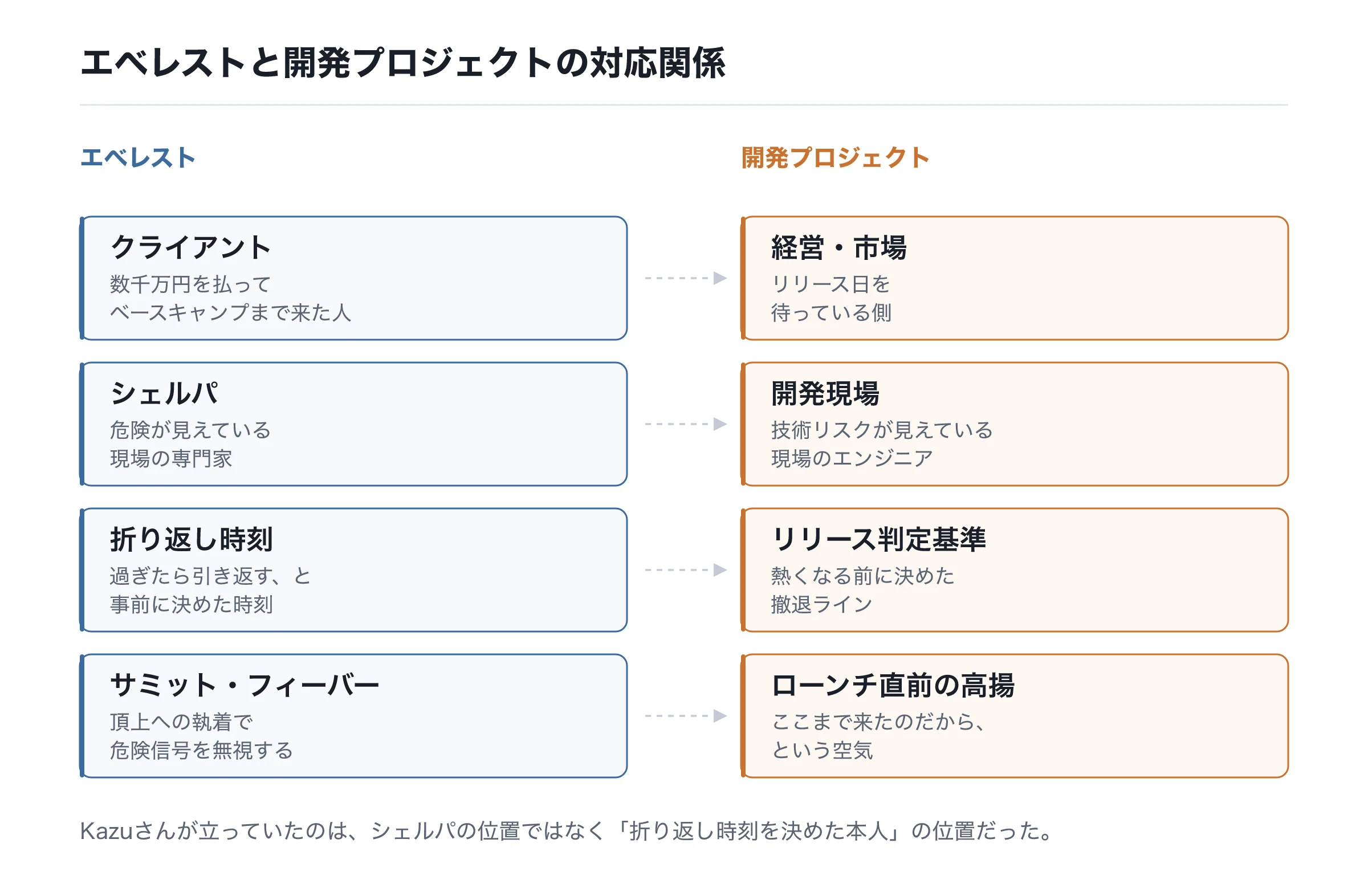
A project's death rarely arrives as a single moment. Repeated slips, quality that won't converge, blockers found one after another. In Kazu's experience, too, one incident was hiding behind another. Most often it's a process of edging closer to too-late, a little at a time.
From the business side, the warning signal that says "keep climbing and we might die" is hard to see at the same resolution the team sees it. There are shareholders and partners who were promised a date, there's a market window, and the desire to summit sooner is natural. Nobody is the villain here.
You can say the engineering side has the authority to assess technical risk and call a halt. You can equally say it has the responsibility to. But what Everest teaches is that this authority doesn't function just by being declared, and it isn't something an individual Sherpa can make function.
The turnaround time was gutted in the field by the very person who set it. In the same way, writing "engineers and AAs have the authority to stop" into internal policy almost certainly changes nothing on its own.
The contrast I keep coming back to is Toyota's andon. Any worker on the production line can pull a cord or press a button when they spot an abnormality, and flag it. This is often cited as a good example of handing over authority in a form that can actually be operated on the floor (Toyota UK).
What's interesting is that pulling the andon doesn't stop the line immediately. A notification goes to the team leader first, and the leader comes over. Only if the problem isn't resolved within a set window does the line actually stop. The andon isn't a stop button. It's a mechanism for reporting an abnormality and summoning people.
Why does it work? Less because authority was granted, and more because the operating practice that supports it came bundled with it. The person who pulls the cord isn't blamed; pulling it escalates the issue to the organization. And the worker who stopped the line is safe from reprisal.
A Sherpa finds it hard to recommend turning back not for lack of courage, but because the season's income disappears. Making the authority to stop function requires structure built for it.
Takeaways
- A project doesn't fail to stop because someone is timid. In 1996, even Rob Hall — who called the turnaround time an absolute law — couldn't enforce it. And a Sherpa's inability to press the point isn't about courage; it's that the season's income vanishes.
- The authority to halt doesn't come into being by being declared as policy. Even with a turnaround time on the books, without the trust and the economic safety net to exercise it, it gets neutralized in the field with ease.
- The very design of "hand individuals on the ground the authority to stop" is the wrong shape. What actually stopped climbing on Everest wasn't one brave person speaking up; it was the Sherpas boycotting collectively. Routing decisions in the Khumbu Icefall are carried by the SPCC as an organization, not by individuals. And with andon, the individual who pulls the cord isn't the one who stops the line — the leader comes, and if the problem can't be solved, the mechanism stops it.
What we should be designing isn't individuals capable of courage, but mechanisms that stop without requiring anyone to be brave. "Who holds the role and authority to stop things?" is the wrong question in the first place. "How have we designed the mechanism that stops things?" is the better one.
Thanks again to Kazu for sharing such an interesting lens.
References
- EBSCO: Sherpa people
- Follow Alice: The Vital Role of Sherpas on Mt. Everest
- PNAS: Metabolic basis to Sherpa altitude adaptation
- PLOS One: Genetic Variants in EPAS1 Contribute to Adaptation to High-Altitude Hypoxia in Sherpas
- Wikipedia: Khumbu Icefall
- Wikipedia: Rob Hall
- Outside: The Icefall Doctors of Mount Everest
- Kathmandu Post: Everest route through Khumbu Icefall finally opened after 19-day delay
- Journal of Physiology: Updates to mortality on Mount Everest 1921–2024
- Climbing.com: How Much Does It Cost to Climb Everest in 2026?
- IERE: How much do Sherpas get paid on Everest?
- Macrotrends: Nepal GDP Per Capita
- Wikipedia: 1996 Mount Everest disaster
- Advnture: What was the 1996 Everest disaster?
- Wikipedia: Ang Dorje Sherpa
- Wikipedia: Lopsang Jangbu Sherpa
- Britannica: 1996 Mount Everest disaster
- Explorersweb: How responsible are Sherpas for the lives of their clients?
- CNN: Kenyan mountaineer dead, Nepali sherpa missing on Everest
- NPR: On Mount Everest, Sherpa Guides Bear The Brunt Of The Danger
- Wikipedia: 2014 Mount Everest ice avalanche
- Vice: Nepal Can't Really Afford a Sherpa Boycott of Mount Everest
- Outdoor Journal: Insurance cover for Sherpas hiked by 50%
- National Geographic: Historic Tragedy on Everest, With 13 Sherpas Dead in Avalanche
- NPR: High On Mount Everest, Climbers Clash With Sherpas
- Alan Arnette: Everest by the Numbers 2025 Edition
- Alan Arnette: Everest 2025: Nepal New Rules, Some Good, Some Not
- Toyota UK: What is Andon? The Toyota Production System explained
Photos
All photos in this article are from Unsplash.
- Line of porters and the Khumbu Icefall: Sebastian Pena Lambarri
- Prayer flags at Thukla Pass: Ananya Bilimale
- Everest: Ben Gao
Comments
Share your thoughts or questions. Comments are published after approval.
Write a comment