2021 went by in a flash. In the second half of the year, conditions around 10X shifted dramatically — and I ended up reaching year-end chasing after the changes rather than anticipating them. My honest self-assessment as a CEO this year: about 50 out of 100.
Management, as I understand it, has its highest value when it's anticipating the future, moving proactively, preventing problems before they arise, and thereby increasing returns. On that dimension, I fell short.
That said, what 10X attempted this year was large — and we made significant updates not just to the business but to the organization. Those updates, I believe, will substantially change existing impressions of what 10X is.
This post is a CEO's-eye view of the year at 10X — covering both business and organization — written for anyone who holds one of these impressions and would like to update it:
- "10X feels individualistic and hard to approach"
- "10X doesn't seem to prioritize organization or management"
- "Is there really a place for me there?"
1. TL;DR — Three Lines for Busy People
- A value proposition-level update has expanded our potential significantly.
- To realize it, we're going deep on organization. Headcount tripled this year — and we now believe that "organizational management that draws out the full potential of diverse individuals" is what will drive the business.
- Come join us for a big challenge at the new 10X. The space for different people to contribute has widened, and new job openings are multiplying rapidly.
2. Business Change? No — Transformation
2020 was the year of the pivot from Tabery to Stailer. But 2021's change exceeded even that.
Stailer's business model evolved in a way that transformed the value proposition itself. Let me compare end-of-2020 to end-of-2021.
End of 2020 — Mobile UX
At the end of 2020, Stailer's value proposition looked roughly like this:
2020 Stailer Value Proposition
We had built a site controller that wrapped around existing retailer systems and exposed an API-like interface, then delivered a high-quality mobile client experience on top of that. That was the most distinctive technical element.
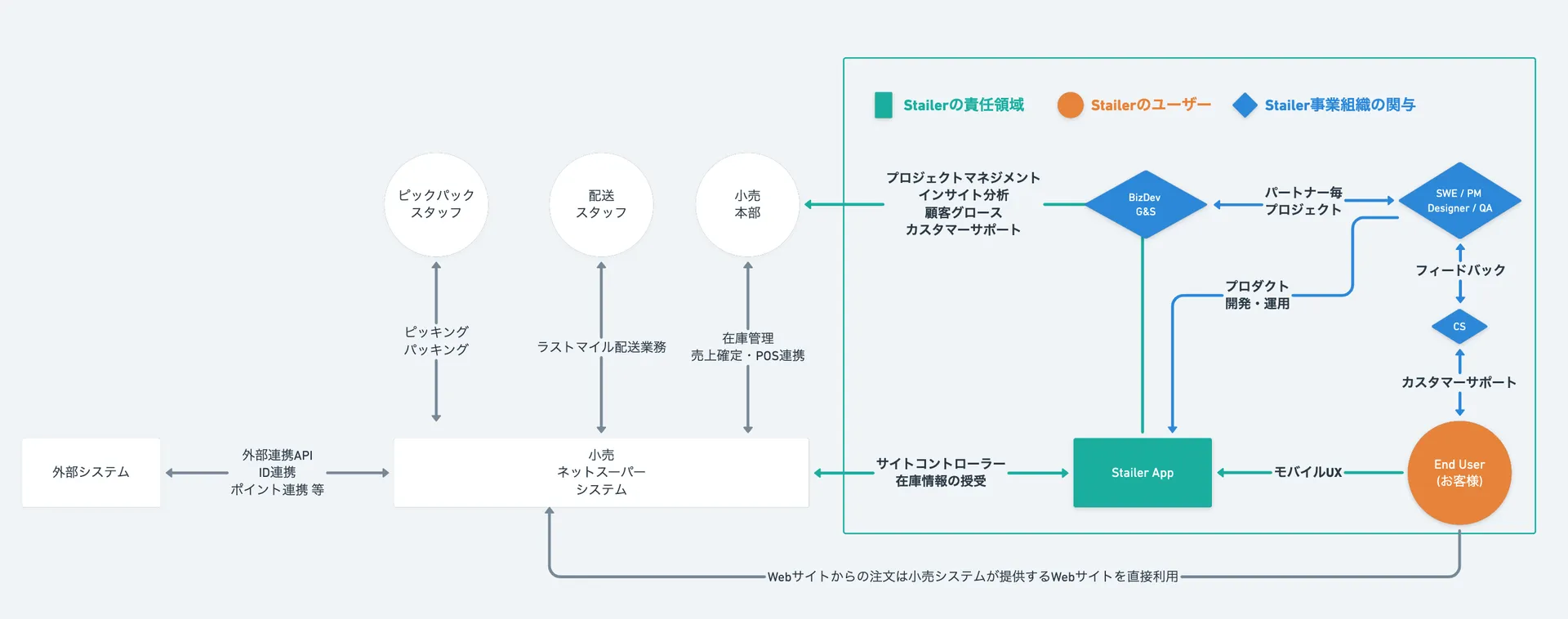
Product development was almost entirely internal to 10X, and the primary user was the end customer. Stailer's accountability sat heavily on the consumer side.
End of 2021 — Whole Product for Chain Stores
A year later, Stailer's value proposition looks completely different:
2021 Stailer Value Proposition
The same business on the surface — but the contents have fundamentally changed. Comparing the two in table form makes it clear they're almost different businesses.
Stailer's scope of responsibility and its user base expanded dramatically — covering the entire supply side, including partner support and SCM design. Stailer has become a Whole Product.
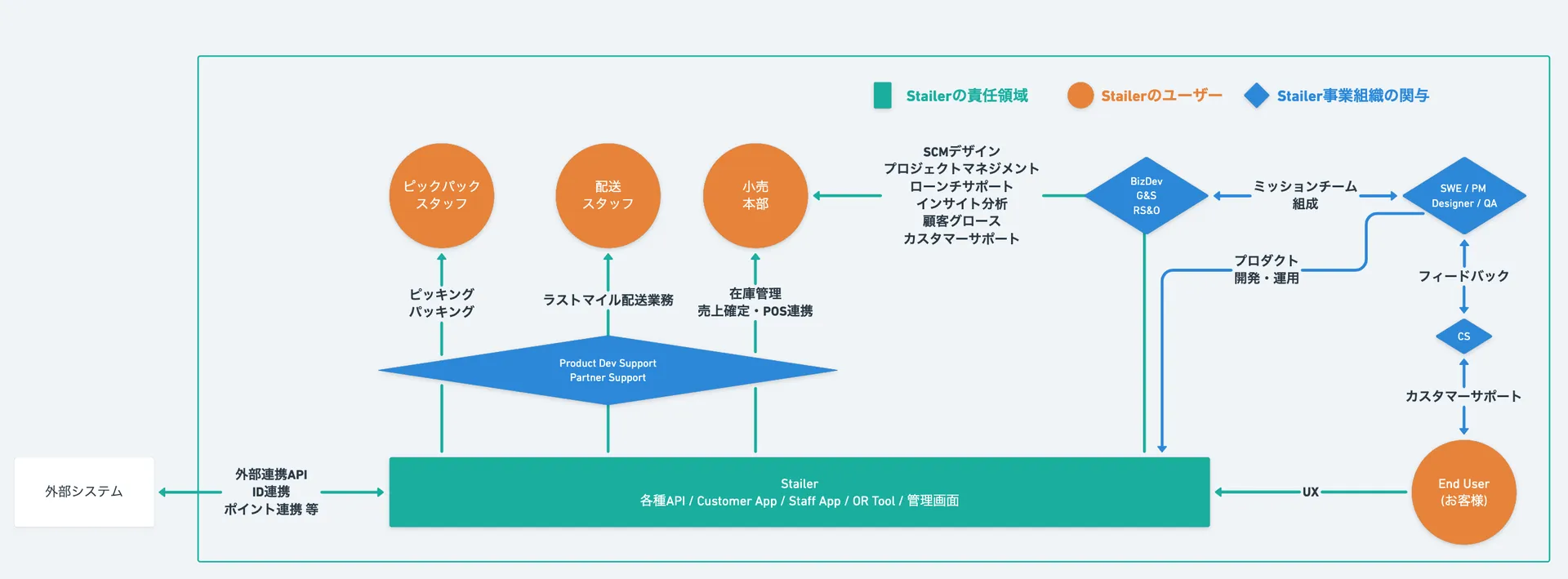
As a result, product size expanded approximately 4–5x and became substantially more complex. The operational commitment required to deploy and support partners also expanded 4–5x.
And the transformation of the value proposition delivered one more major impact: the potential customer base grew 30–50x.
Many retailers had previously found net supermarket investment too risky to attempt. Only about 3% of Japanese retailers had "gone online" at all. Stailer opened that door to every retailer in the country.
The result: inquiries — from local SMBs to major national chains — have been continuous and show no sign of slowing. Partner (contract) count has expanded sharply. Current partners are almost entirely enterprises with annual revenues in the hundreds of billions of yen.
- What we build has expanded rapidly
- The stakeholder interfaces have expanded rapidly
- The number of partners has expanded rapidly
- The need for abstraction (platformization) to handle partners consistently has grown rapidly
All of this happened in parallel, in a single year. Stailer has started to claim the position of "core infrastructure for going online" in retail and enterprise.
3. Organizational Transformation — The Road to a Matrix Structure
Looking at the business, this appears to be a strong story. But honestly: our organization building fell completely behind.
End of 2020 — Functional Organization
Through 2020, a functional organization worked well. Departments mapped to functions, functions mapped to missions — easy to align business and organization. With only ~15 people, cross-functional collaboration could be delegated to individuals or handled through temporary projects. The team worked.
Board
├── Product
│   ├── Engineering
│   └── CS
├── Biz
│   ├── BizDev
│   └── Growth
└── Finance & Corp
    ├── Finance
    ├── PR
    └── Corporate Admin
By fall 2021, the org chart had become unreadable — multi-layered functions branching in every direction. A reflection of how quickly the business had grown.
Mid-2021 Friction
As the company's functions expanded both vertically and horizontally to match business needs, the structure of "using temporary projects to drive collaboration between swollen departments" hit its limit:
- Projects were always under-staffed; everything was firefighting delivery
- Processes and knowledge didn't accumulate; learnings went only to individuals
- No permanent resource meant anything requiring long-term investment was sacrificed
The result: friction severe enough to require a fundamental rethink of the organizational structure. This was something management should have anticipated and acted on preemptively. Embarrassingly, my decision was completely delayed. That delay caused real burden internally and externally, and I'm genuinely sorry for that.
End of 2021 — Matrix Organization
After the friction peaked, I went through a cycle of "conversations with the team, organizational strategy research, small experiments" — and three issues became clear:
- Align organizational structure to business missions
- Ensure permanent resource within teams to enable long-term work
- Drive process building and improvement within teams
The answer that emerged: stop the proliferation of projects; refactor into five mission-based teams with no-overlap assignments. A shift to a matrix organization.
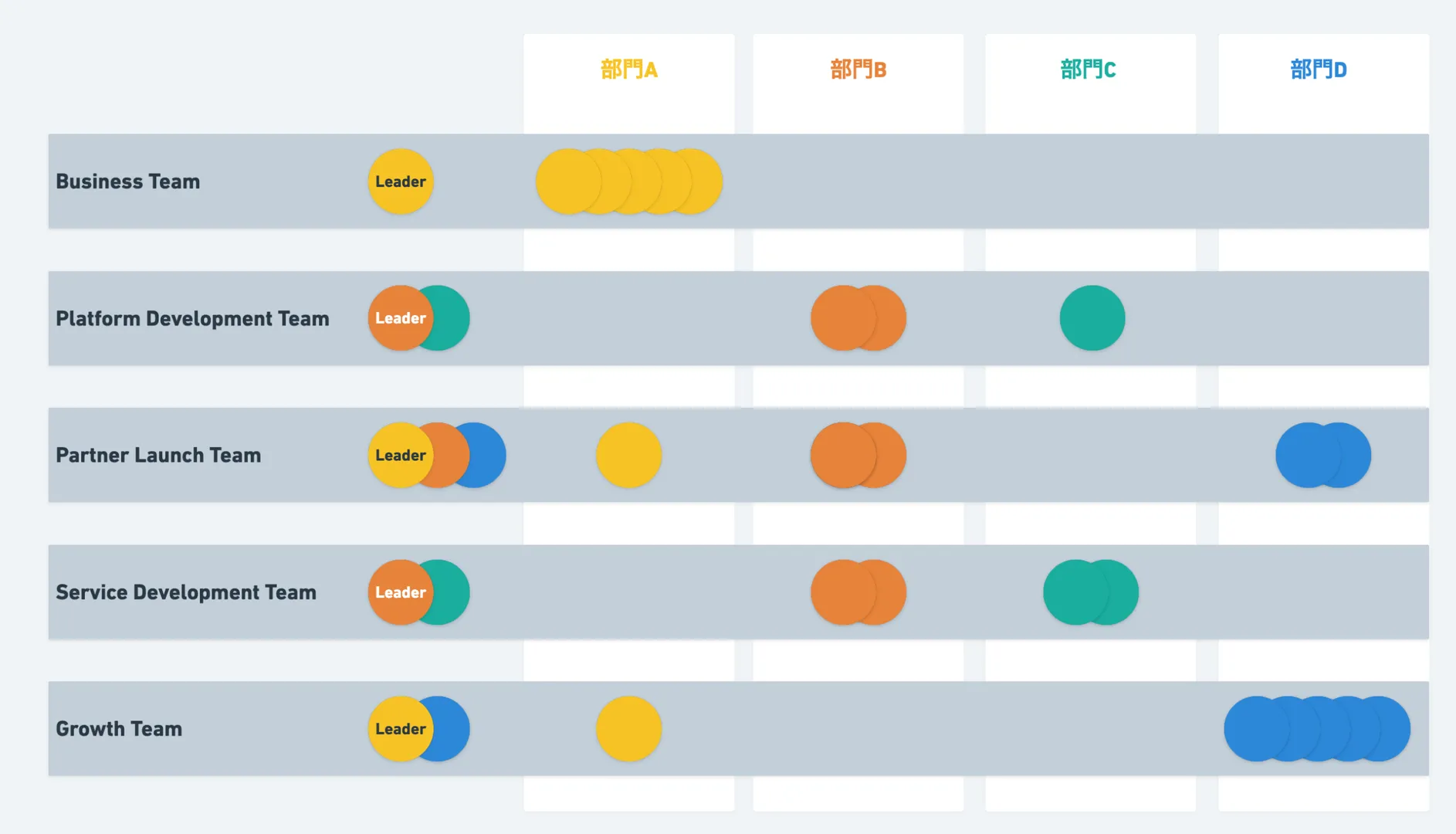
With mission teams fixed, we expect:
- Processes can be refined within teams
- Teams can focus on their own milestones
Additionally, this structure creates organizational benefits:
- Codified processes and clearer role division → easier to hire people without prior experience
- Specialized roles within missions → easier to evaluate and recognize specific expertise and passion
More details are in a three-part podcast series featuring internal team members — highly recommended for anyone interested.
4. Will 2022 Be Calm? — Not Even Close
Here's a quick preview to close.
What I've described above might sound like: "The business is expanding, the organization is sorted — now just grow." Not at all.
The following matrix maps net supermarket business models (rows, 5 types) against supply models (columns, 6 types). As you can see, Stailer currently covers only a small fraction of these combinations. The 2022 challenge is already underway, expanding both upward and to the left.
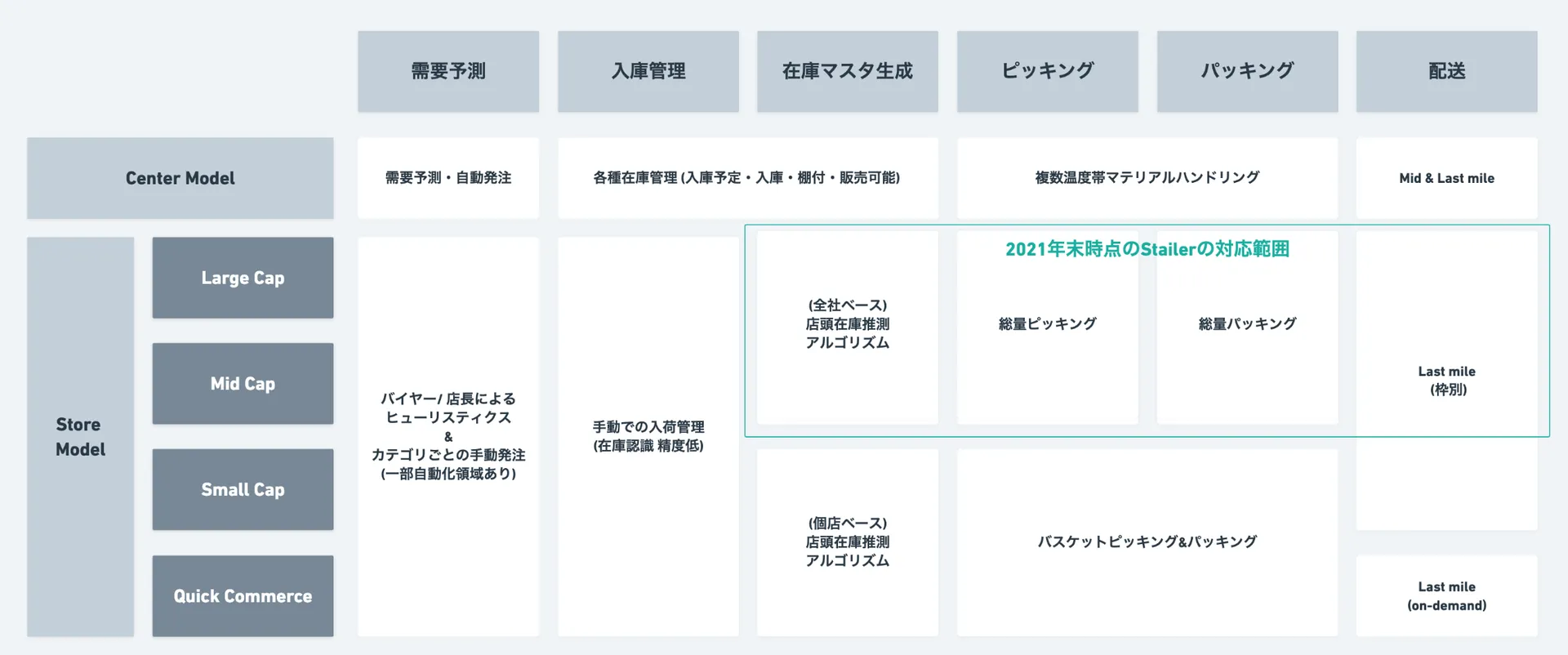
Center and Store are fundamentally different businesses from what we do today. But to grow the market of "buying groceries online," both are things 10X must internalize. And the team we have growing is increasingly diverse enough to handle those non-linear challenges.
A glimpse of the team:
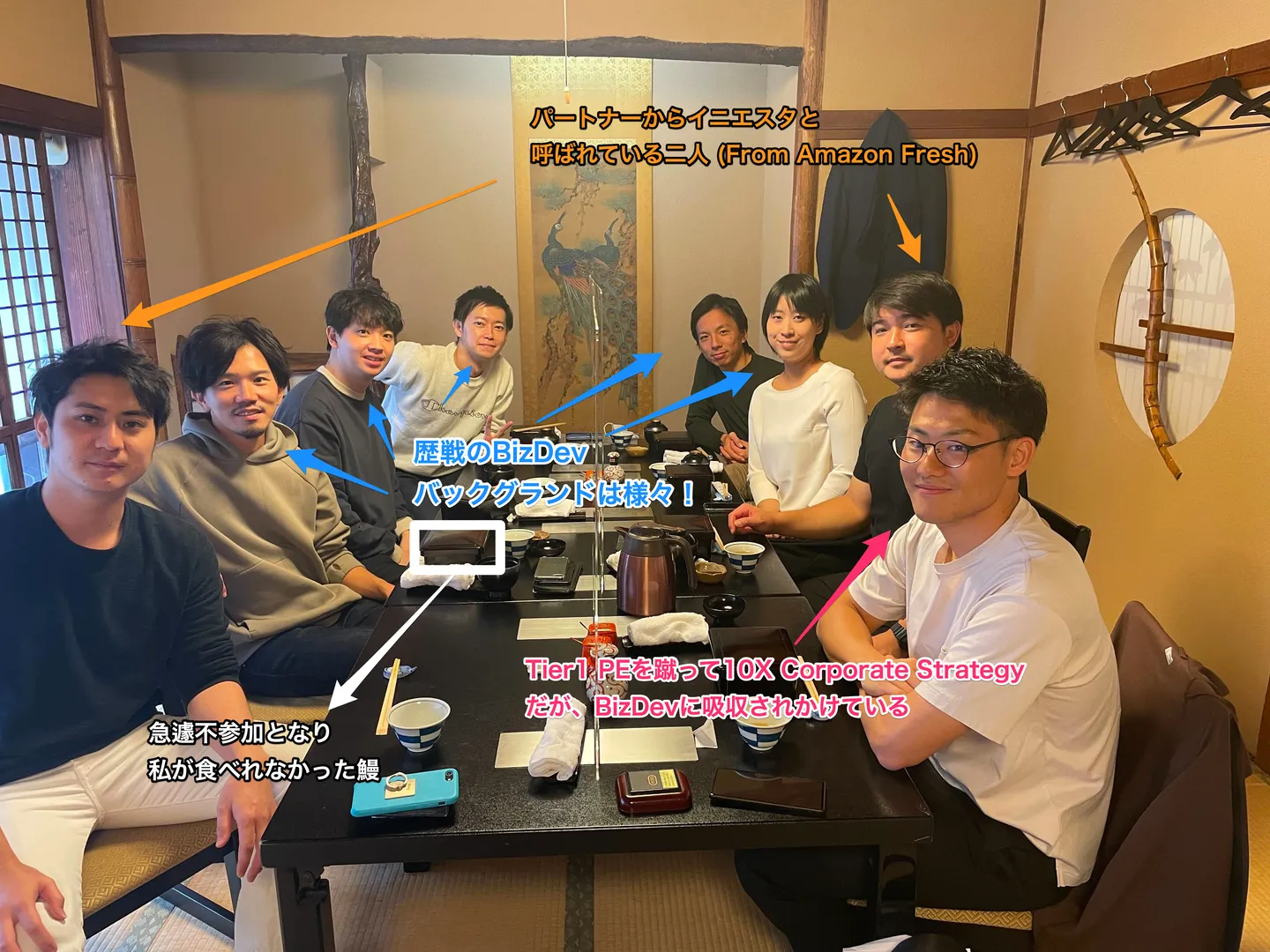
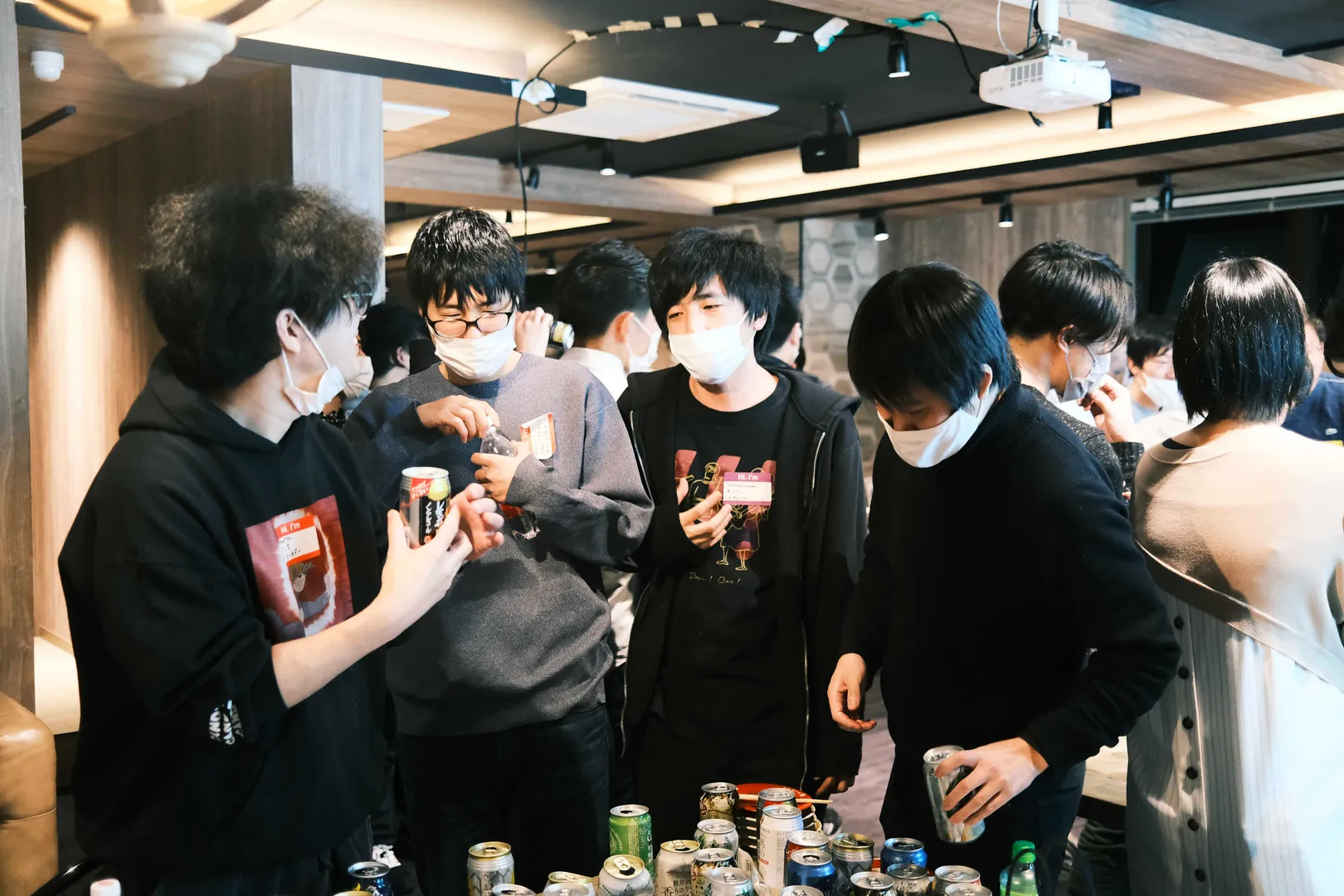
A year and a half since launching Stailer. In that year and a half, everything we've accomplished is already exceeded by the "must do" volume piling up every day. Moments of doubt and urgency are frequent. But a few times a year, there are moments that move you. And above all, this is a business I can be proud of to anyone.
10X is a group of people chasing non-linear value for real problems, sleeves rolled up, in a giant market. The frontier keeps expanding — and especially over the last six months, new positions and new ways to contribute have been emerging daily. The dynamism is real and growing.
2022 requires us to turn up the heat on what we ignited in 2021. 10X's slowness is the market's slowness — and the slowness of the end user experience. The plan calls for 100+ people with certainty, and a wider vessel as a company. As a founder, my challenges are real. But this business is aimed at creating the "normal" of decades from now, pointing far into the future.
Today we're at 0.1% of where we're going. Every year feels like the first step.
Want to take that first step together?


Comments
Share your thoughts or questions. Comments are published after approval.
Write a comment