The advances in LLMs are gradually replacing much of knowledge work. This shouldn't come as a surprise at this point, and I don't think fear is a particularly useful response.
A more constructive question is: what should we do instead?
There's an analogy I've grown fond of over the past few years. When the automobile replaced the horse as a mode of transportation, horseback riding didn't disappear. If anything, the opposite happened — in an era when horses were a necessity, the very idea of riding as a hobby was hard to conceive.
When everyone rode horses out of necessity, skill differences existed, but they were just that — differences in capability, nothing more. Then cars became widespread, and suddenly riding became something you chose to do. Skilled riders earned respect, found others who shared their passion, and a genuine market emerged around the craft. Nobody could have predicted that during the age when horses were simply how you got from place to place.
I think the same shift is beginning to happen right now, across every kind of human endeavor that starts with knowledge work. When I ask myself what matters in this new landscape, I keep arriving at the same answer: having a sense of what you find beautiful.
In the horseback riding analogy, it's the aesthetic — a feeling that there's something beautiful in the relationship between horse and rider — that draws a person to the practice. Once getting somewhere quickly and accurately is no longer the point, how you communicate with the horse, how you ride, becomes the thing that holds value.
The only way I know to discover your own aesthetic is to put something out into the world. When you do, people respond — and among those responses, you'll find someone who sees beauty in the same things you do. My friend Hikaru and I have been talking for ten years now. I think what clicked from the start was a shared sensibility about writing. Being able to say "this sentence is great" or "this part feels unnecessary, doesn't it?" — finding someone to have that conversation with is rarer than you'd expect. A person who shares your aesthetic is genuinely hard to come by.
The Concept of "The Way"
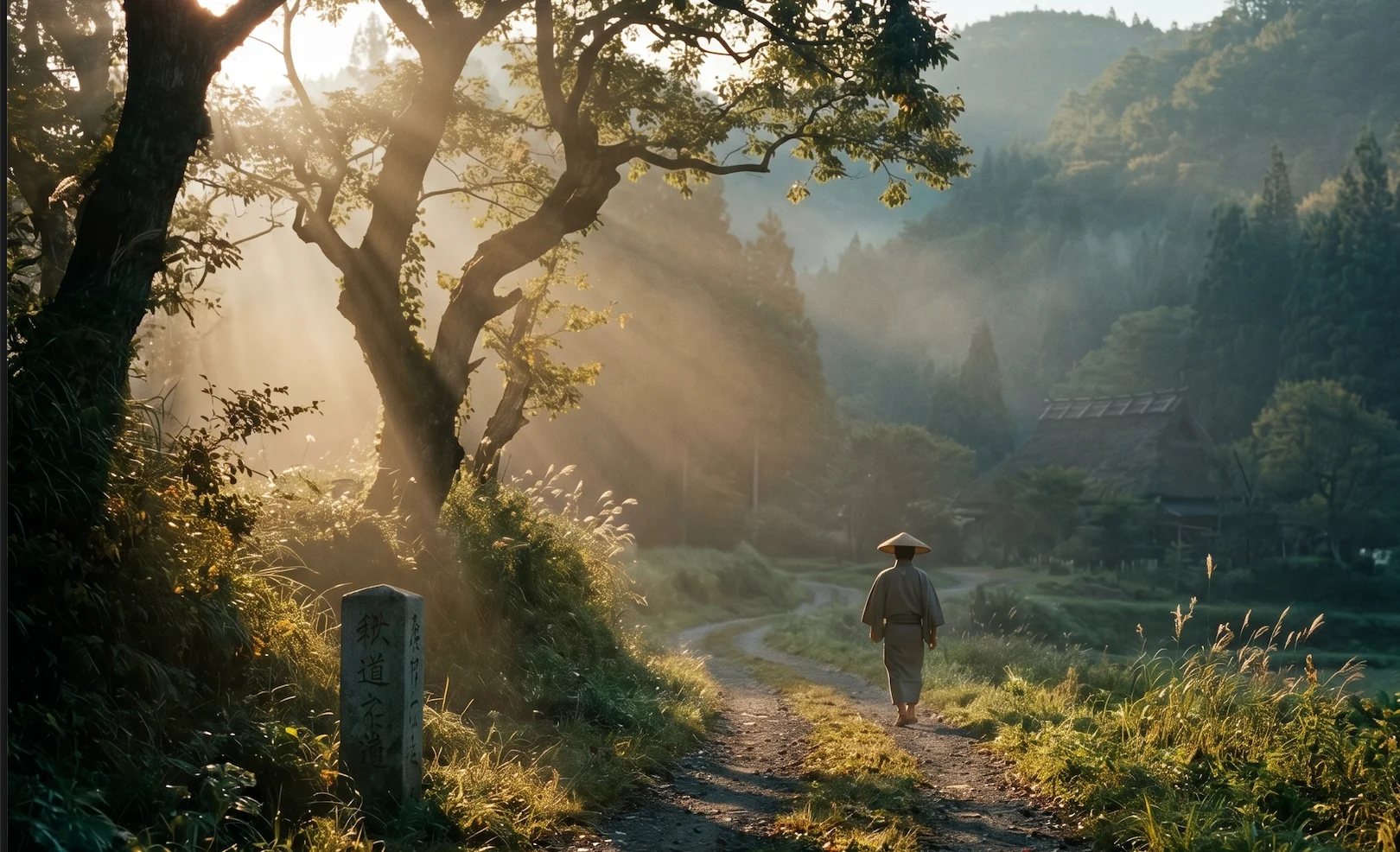
In Japanese culture, there is a concept called dō (道) — "the way." It appears in bushidō (the way of the warrior), sadō (the way of tea), kadō (the way of flowers).
At its core, dō is not about technique or results. It's about posture, discipline, and dialogue with oneself. In the tea ceremony, what matters isn't making delicious tea efficiently. It's how you refine each movement, how you compose the space — the process itself carries meaning. Embedded in dō is the idea that you're not competing against others, but against your own standards.
AI has already come remarkably far in accuracy, speed, and even wit. Honestly, there are more things where I think I can't beat it than things where I think I can. But what about my-ness, continuity, and a history of accumulated practice? That's dō — and it might be exactly what separates me from AI.
I love writing. And no, I can't beat AI in accuracy, speed, or cleverness. But I still find value in continuing to write in a way that feels like mine. If you asked me why, the honest answer is: I like the feeling of clearing my own bar.
I don't pay much attention to whether something goes viral on social media or how many people read it. I try to care, but it doesn't really stick. What keeps me writing is more like: "This piece goes deeper than what I wrote before" or "I managed to express this more clearly than last time."
I think the reason Hikaru and I have kept talking for ten years is that we share this kind of sensibility. We can talk about writing without letting each other off the hook. And that thread has kept going, thin but long.
"Aesthetics and the way" — this phrase captures where I stand in terms of how I define myself right now. Keep sharpening your sense of what you find beautiful. Find joy not in external validation, but in clearing your own bar. And the history of practice that builds up through that continuity — I believe that becomes something AI cannot replace.
Just as a skilled rider found their people after cars took over the roads, I might find someone who shares my aesthetic. That's the hope I carry as I keep writing.
Comments
Share your thoughts or questions. Comments are published after approval.
Write a comment