In 2024, Amazon pulled its cashierless technology from all its grocery stores, and a startup that had raised $93M went bankrupt. Meanwhile, that same year, an Israeli startup quietly crossed the 100-store mark.
I wanted to make sense of these stories together, so I did a deep dive into the technology trends shaping supermarkets in the AI era. Four major patterns emerged.
- "Technically impressive" alone doesn't create a market
- Vertically focused players with clear ROI are growing fast
- Existing SaaS vendors are embedding generative AI and evolving toward "predict → generate → act autonomously"
- Data-rich major retailers are moving to build AI in-house, and that's changing their relationship with SaaS vendors
Let me walk through each one.
The Dream and Reality of Cashierless Checkout
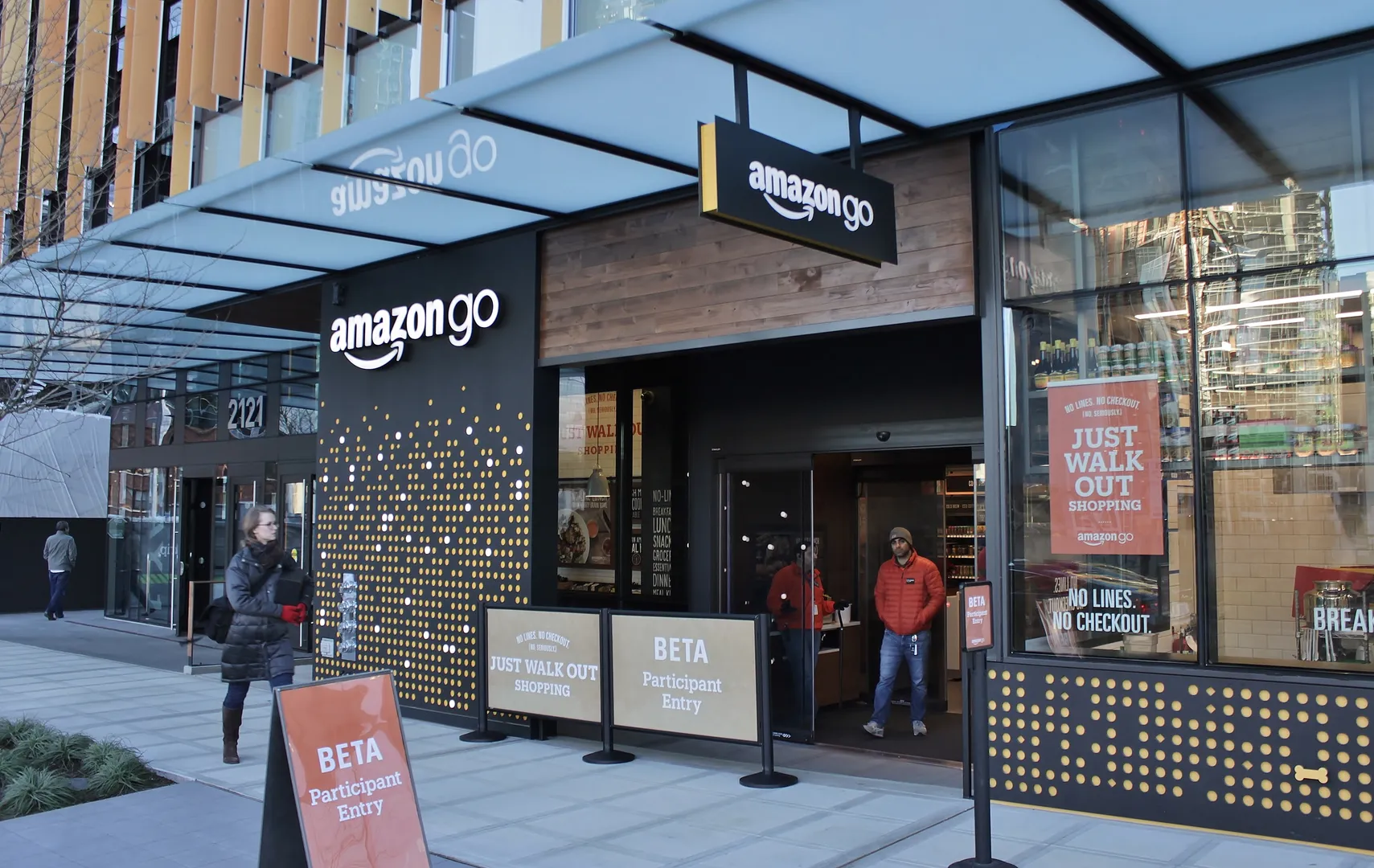
"A store without cashiers" was the defining theme of retail tech in the late 2010s. Amazon opened Amazon Go, and startups piled in. But 2024 brought a major turning point for that dream.
In April 2024, Amazon pulled its Just Walk Out technology from all Amazon Fresh stores. The system had been marketed as "fully automated AI-powered checkout," but the reality was that over 1,000 workers in India were manually reviewing footage to maintain accuracy. The cost and complexity simply didn't pencil out, and Amazon was forced to pivot to smart carts instead.
Then in October of the same year, Grabango — which had raised $93M in this space — shut down. The company had strong retail partners including Aldi, Giant Eagle, 7-Eleven, and Circle K, yet failed to raise additional funding. Its camera-only, sensor-free approach was considered technically superior to competitors, but retailer adoption lagged far behind plan, and the capital-intensive model couldn't keep up with the revenue it was generating.
These two cases made one thing undeniable: "technically feasible" and "economically viable" are completely different things. Cashierless checkout requires a full retrofit of existing stores, and the upfront cost and complexity have been enough to stop most retailers from committing.
That said, some players in this space have survived. Israel's Trigo raised a $100M Series C in 2022 (over $204M total) and had deployed across more than 100 stores globally as of Q3 2024. They've partnered with REWE, Tesco, Aldi Nord, Netto, and Auchan, scaling steadily across Europe. Part of why Trigo has survived is Europe's higher labor costs (which make automation ROI easier to justify), along with a strategic focus on new builds and already-renovated stores rather than full retrofits of existing locations.
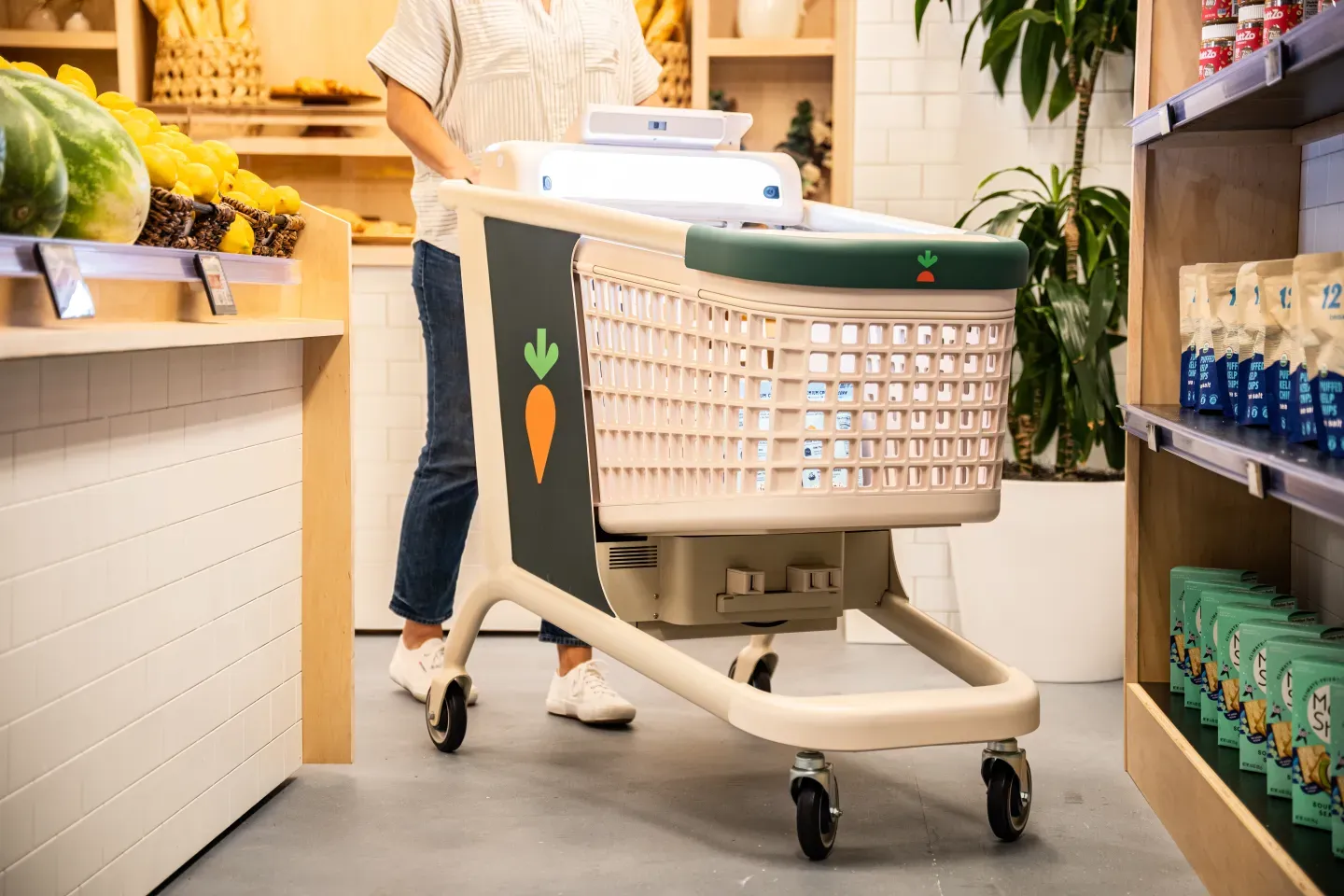
Instacart's Caper Carts — sensor-equipped smart carts running edge AI chips (NVIDIA Jetson) — are another story. Because they don't require a full-store overhaul, the barrier to adoption is much lower. They work as a partial improvement to the checkout experience rather than an attempt at full automation.
The industry is absorbing a hard-won lesson: "human + AI hybrid" is more practically viable than "fully autonomous."
Fresh Waste Reduction: The Hot Category Right Now
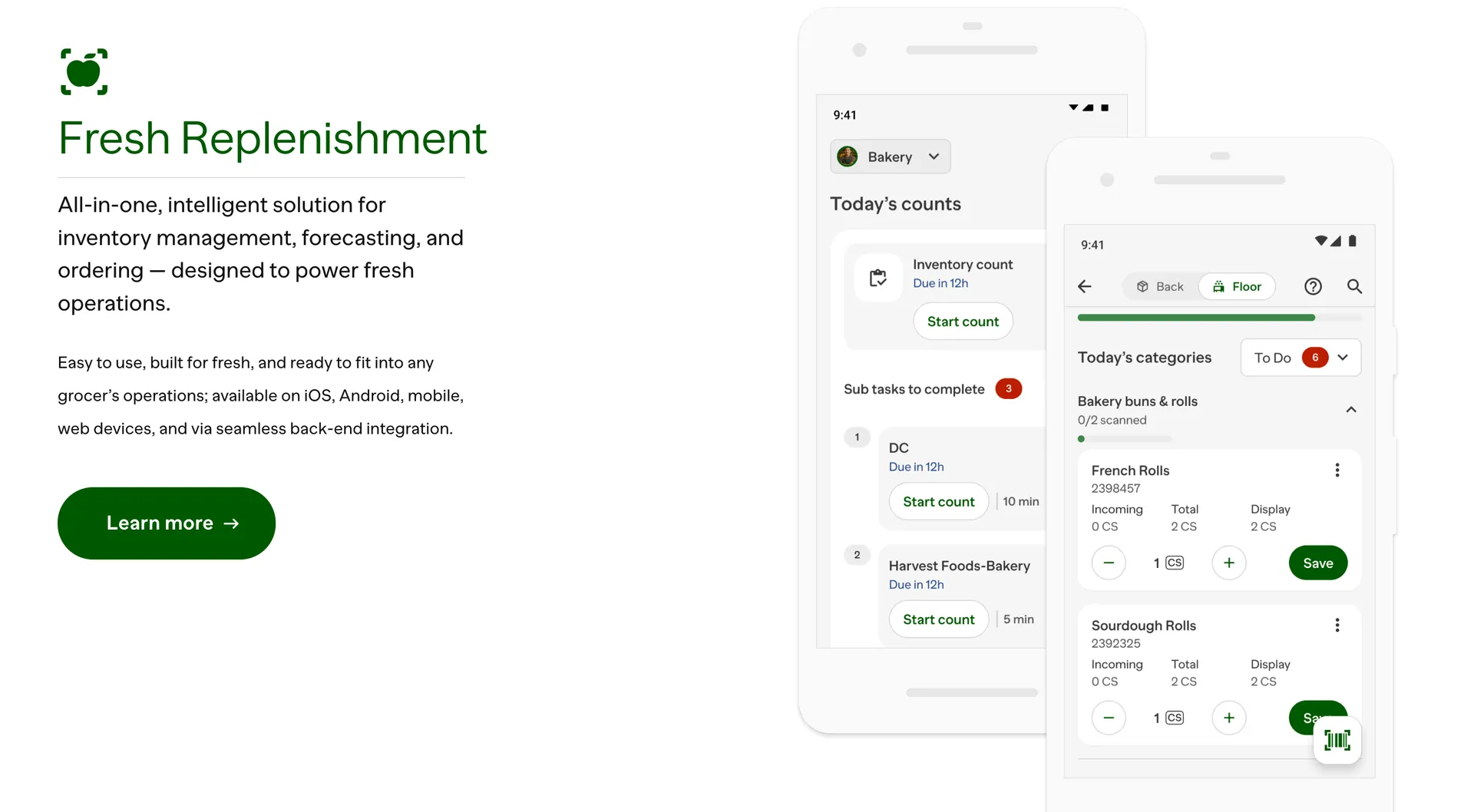
While cashierless checkout has struggled, the hottest AI-native category in grocery right now is demand forecasting and waste reduction for fresh food.
The standout here is US-based Afresh Technologies. It's an AI platform purpose-built for fresh departments — produce, meat, seafood, deli, and bakery — and in April 2026 the company announced a $34M additional raise (co-led by Just Climate and High Sage Ventures). Revenue is growing 70% year-over-year. The platform is deployed across more than 12,500 departments in 40 US states, with major customers including Albertsons, Wakefern, Stater Bros., Meijer, and Fresh Thyme.
The reported results at Albertsons are striking: a 25% reduction in fresh food waste and a 3% increase in sales. Across its lifetime, Afresh claims to have prevented over 200 million pounds of food waste.
Europe has its own contenders in this space. Berlin-based Freshflow, an AI for fresh food supply chain optimization, raised a €6.5M Series A in 2025 (co-led by World Fund, Capnamic, and Venture Stars), bringing total funding to €8.7M. Deployed with Carrefour, Edeka, and Intermarché, it achieves a 93% order acceptance rate and has already crossed the seven-figure ARR mark (€1M+).
Why is fresh waste reduction such a good fit for AI? Demand forecasting in this category requires combining dozens of variables in real time — temperature, local events, origin data — and that's too complex for rule-based systems. ML handles it well. And because shelf life is short and over- or under-ordering directly translates to losses, the ROI can be quantified clearly as waste reduction. There are also still relatively few specialists in this niche, which means vertical depth compounds quickly. Afresh's rapid growth is the clearest evidence of that thesis.
Finland's RELEX Solutions isn't fresh-only — it's a supply chain planning platform for retail broadly — but it's also performing well: subscription revenue grew 30% YoY in H1 2025, with ARR up 28%. With $816M in total funding (Summit Partners, Blackstone, TCV) and over 700 customers, more than 200 of them are now using its ML-based forecasting tools.
How Existing SaaS Is Being Redefined by Generative AI
While AI-native startups are gaining ground, established retail SaaS players are also moving fast to embed generative AI into their platforms.
Instacart launched Smart Shop AI in March 2025. It combines generative AI and machine learning to analyze customers' buying habits and dietary preferences and deliver personalized product recommendations. The company is also scaling up its AI advertising tools — 2024 ad revenue came in at $1.18B (up 25.5% YoY), the first time it surpassed $1B. Instacart also acquired Wynshop in May 2025 to pull in additional AI personalization capabilities.
SymphonyAI announced its CINDE Connected Retail Platform in January 2025. The platform integrates 13 retail-specific solutions and delivers predictive AI, generative AI, and autonomous AI in a single package. It has now reached over 300,000 store deployments.
Crisp raised $26M in a Series B1 round in December 2025 (cumulative $127M) and is rolling out "AI Agent Studio," what it claims is the retail industry's first platform dedicated to AI agents. CPG brands can use it to build their own AI agents, and over 7,000 brands are already on the platform. Crisp has also acquired Shelf Engine to integrate AI demand planning.
The common pattern across these players is a progression: predict (figure out what will sell) → generate (produce personalized content and recommendations) → act autonomously (handle multi-step tasks without human intervention). The shift isn't just "add AI to existing features" — it's a redesign of the user story with AI as the foundation.
Major Retailers Building AI In-House
One of the most interesting developments is that major retailers themselves are now taking AI in-house.
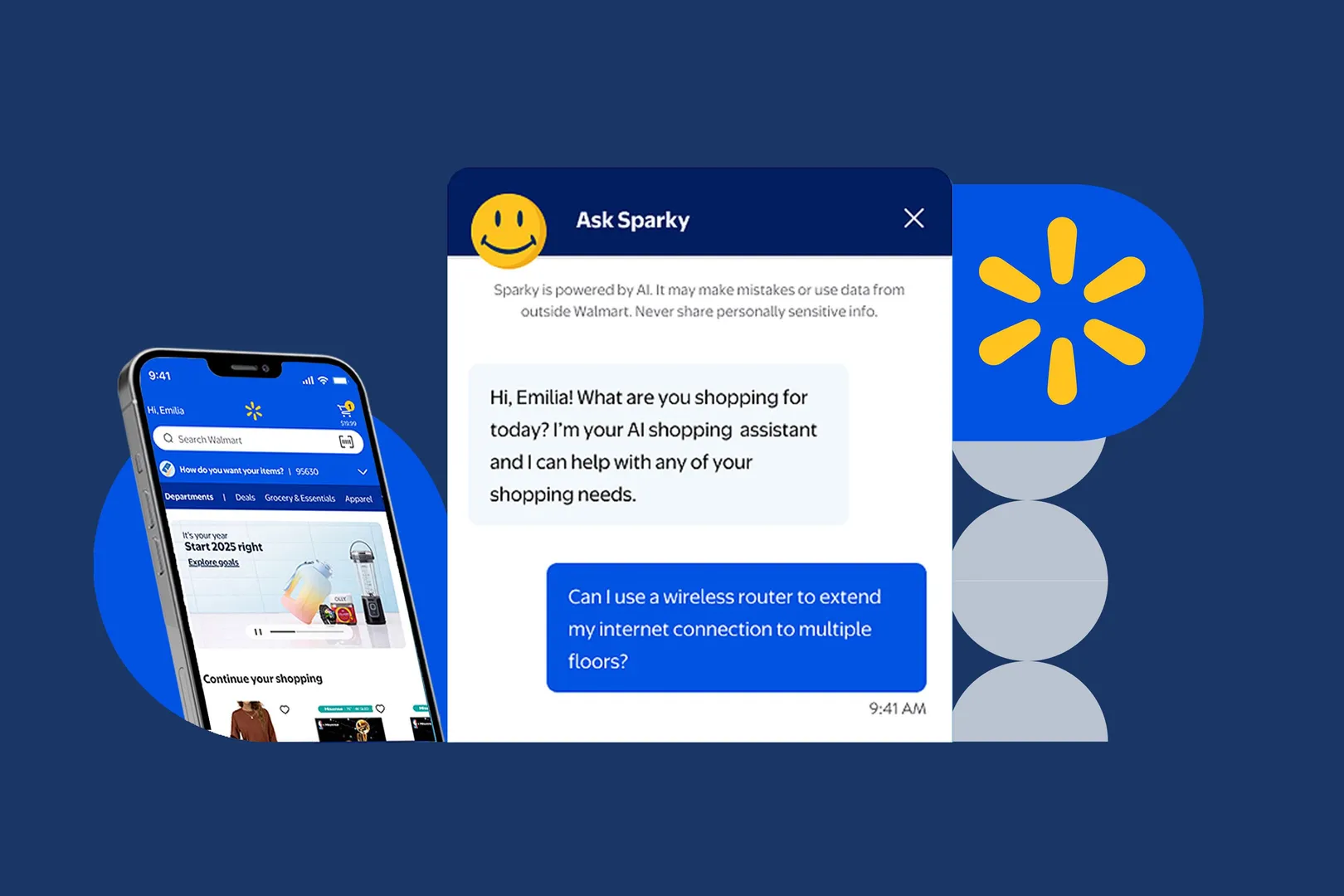
Walmart built its own retail-specific LLM called "Wallaby" and a generative AI assistant called "Sparky." Among the results attributed to AI: improvements to 850 million product catalog entries (automating work that would have taken 100x the human effort), elimination of 30 million unnecessary delivery miles through AI route optimization, and avoidance of 94 million pounds of CO2 emissions.
Walmart partnered with OpenAI in October 2025 on an Instant Checkout feature, but pulled out in March 2026 after conversion rates underperformed. The direct cause was performance, but what's interesting is what happened next: rather than doubling down on the partnership, Walmart flipped the relationship — embedding Sparky into ChatGPT and Google Gemini instead.
The dynamic shifted from "riding someone else's platform" to "being embedded in someone else's platform." It's a clear signal that Walmart intends to put its own model at the center.
Kroger has built an AI and data science division called 84.51°, fueled by purchase data accumulated through its loyalty program. It uses the buying history of over 60 million households for precision demand forecasting and personalized advertising — all kept in-house and never licensed to outsiders. The strategy is deliberate: build a data moat that competitors can't buy their way into.
Albertsons unveiled an Agentic AI shopping assistant in December 2025. It automatically builds a cart from recipes, reads handwritten shopping lists, and suggests meal plans based on what you already have at home. It leverages data from 48.7 million loyalty members (up 13% YoY).
What ties all of this together is a shared orientation: rather than relying on general-purpose models, these retailers are solving industry-specific problems using their own data and their own models. A proprietary model trained on decades of purchase data and master catalog data is in a different league than a general-purpose LLM.
And the more major retailers build AI in-house, the more the demand on external SaaS vendors will evolve. Point solutions will struggle to create much value; products that integrate with and amplify a retailer's own data will be what matters.
The Japan Perspective
Globally, the conversation has shifted to "how do you build and deploy AI on top of your own data for front-line operations?" But in Japan's supermarket industry, there are still more fundamental problems piled up in front of that question. Many operators haven't fully adopted software solutions yet. Core data is still being cleaned and organized. And building the data infrastructure to even enable AI-driven operations is, in many cases, just getting started.
On top of that, the industry is highly fragmented. There are thousands of supermarket operators across Japan, IT investment varies enormously, and many stores don't have dedicated IT staff at all. Per-operator investment capacity is limited, which means the kind of large-scale in-house AI development you see at Walmart or Kroger is essentially out of reach for the vast majority.
AI-era front-line products — demand forecasting, agentic shopping experiences, automated ordering — are beginning to gain traction globally. At the risk of some self-promotion: at 10X, the company I lead, our "Stailer" online supermarket platform has launched Shopping AI, which recommends grocery items to add to your cart based on handwritten recipes, meal plans, or free-text prompts. We're also building "Stailer AI Ordering," a fully autonomous demand-forecasting-driven auto-ordering system. But looking at the Japanese market as a whole, adoption is still in its early stages — and many operators who have adopted new tools haven't yet seen a clear ROI.
To actually close the gap with global trends from this starting point, simply "selling AI products" isn't going to be enough. Vendors need to handle the messy upstream work of data preparation end-to-end. And they need to provide strong hands-on support all the way through to the point where ROI is realized.
But all of that support comes back as cost on the SaaS vendor's side. Which is why I believe that only companies that can abstract that support into a platform — and drive down the cost of providing it at scale — will be able to sustain the business economically over the long run and hold a defensible competitive position.
Comments
Share your thoughts or questions. Comments are published after approval.
Write a comment