We run a full-team 360° review of the CEO and organization every six months. This post publishes the results. The process is commissioned to our investor DCM Ventures — they design the survey, conduct individual interviews, and produce the feedback report. The first round went well, so we've continued it.
The previous review is here. The survey design and flow follows the same structure.
Following last period's feedback, I committed to three actions as CEO:
- Communicate the intent and context behind our mission more explicitly
- Define what "inclusivity" means and what the issues are; create conditions where it coexists with autonomy
- Build a team that compensates for what I personally lack
This review captures how those commitments — and everything else from the past six months — looked from the team's perspective.
Feedback Summary
The full feedback report can be viewed here: https://speakerdeck.com/yamotty/zu-zhi-360-degrees-huidobatukurepoto
Summary:
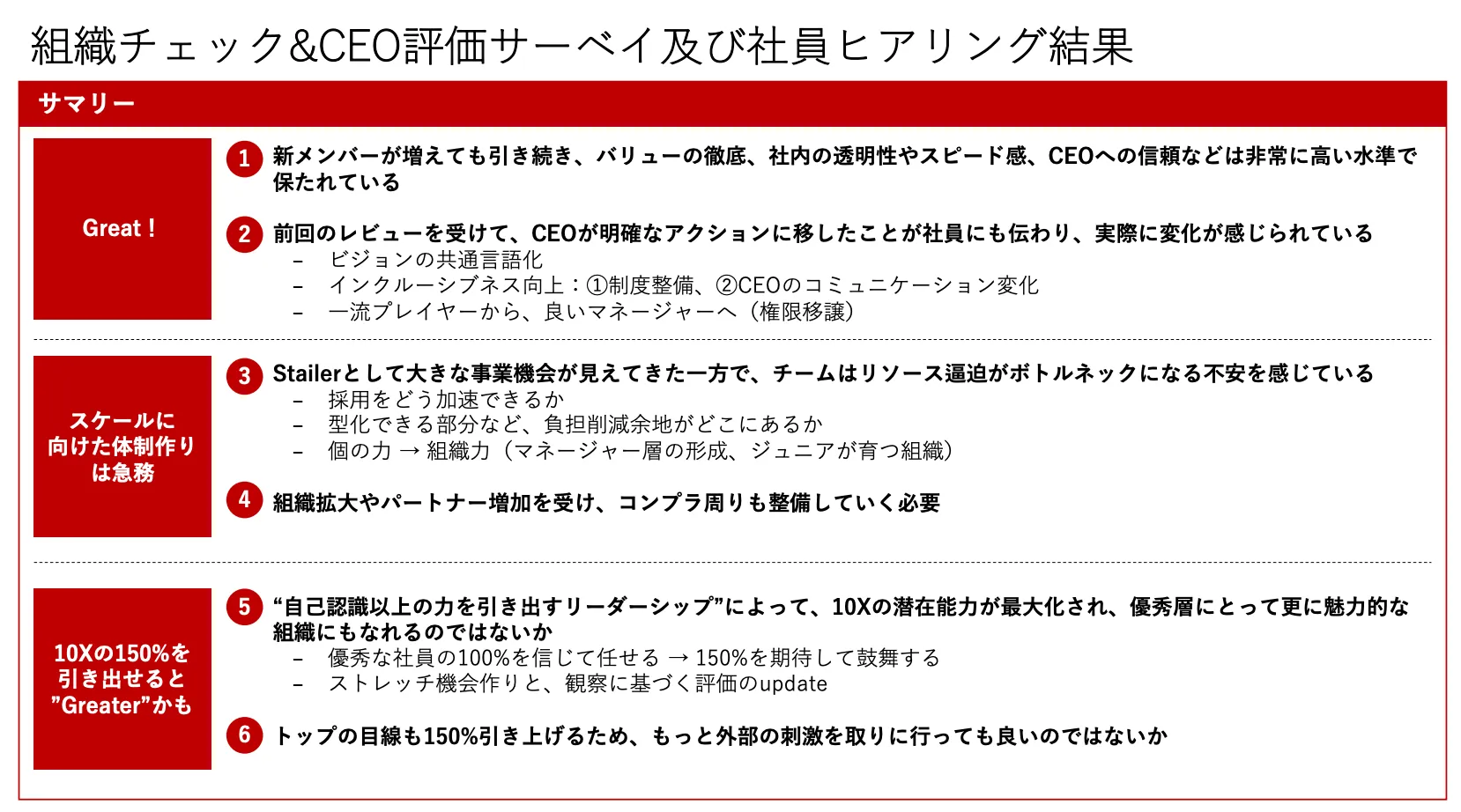
Here is my breakdown of each of the six items.
1 / Values commitment and CEO trust — rated highly
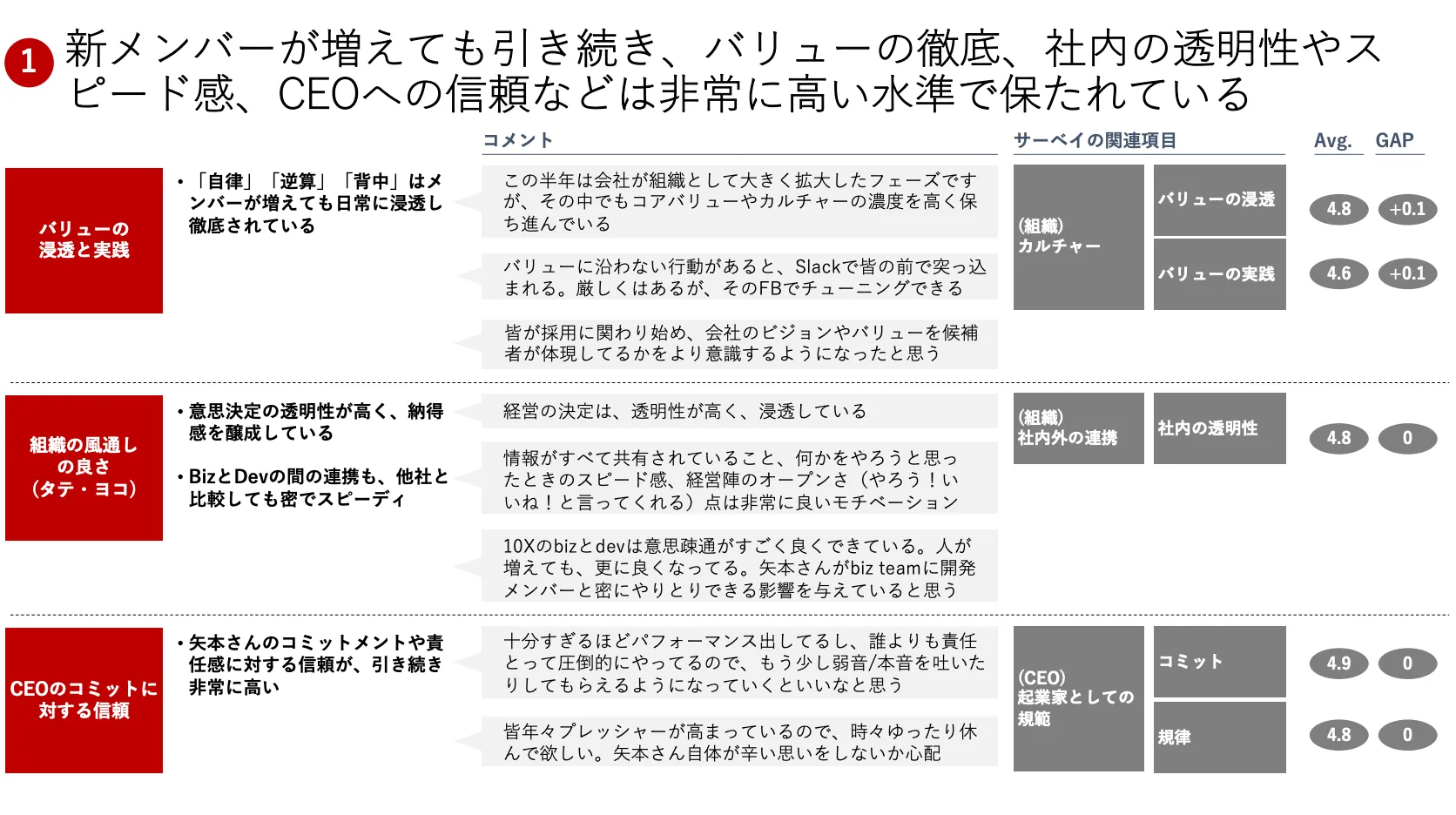
This has remained strong from last period and is the thing I most want to protect as we scale.
This half-year I focused on: (a) maintaining a product-centric culture while (b) building a BizDev organization capable of leading discontinuous growth. Repeated conversations with Raksul COO Fukushima-san — one of the foremost practitioners of this — helped me clarify what a BizDev organization should look like at 10X. That clarity shaped our hiring and onboarding. The BizDev team grew from 3 to 8 people (including offers extended).
My own commitment to show up fully with intensity doesn't change. This half-year I moved one step forward — but the height I'm aiming for went up by 100 steps. I'm at 1%.
2 / Progress on the previous action items was solid
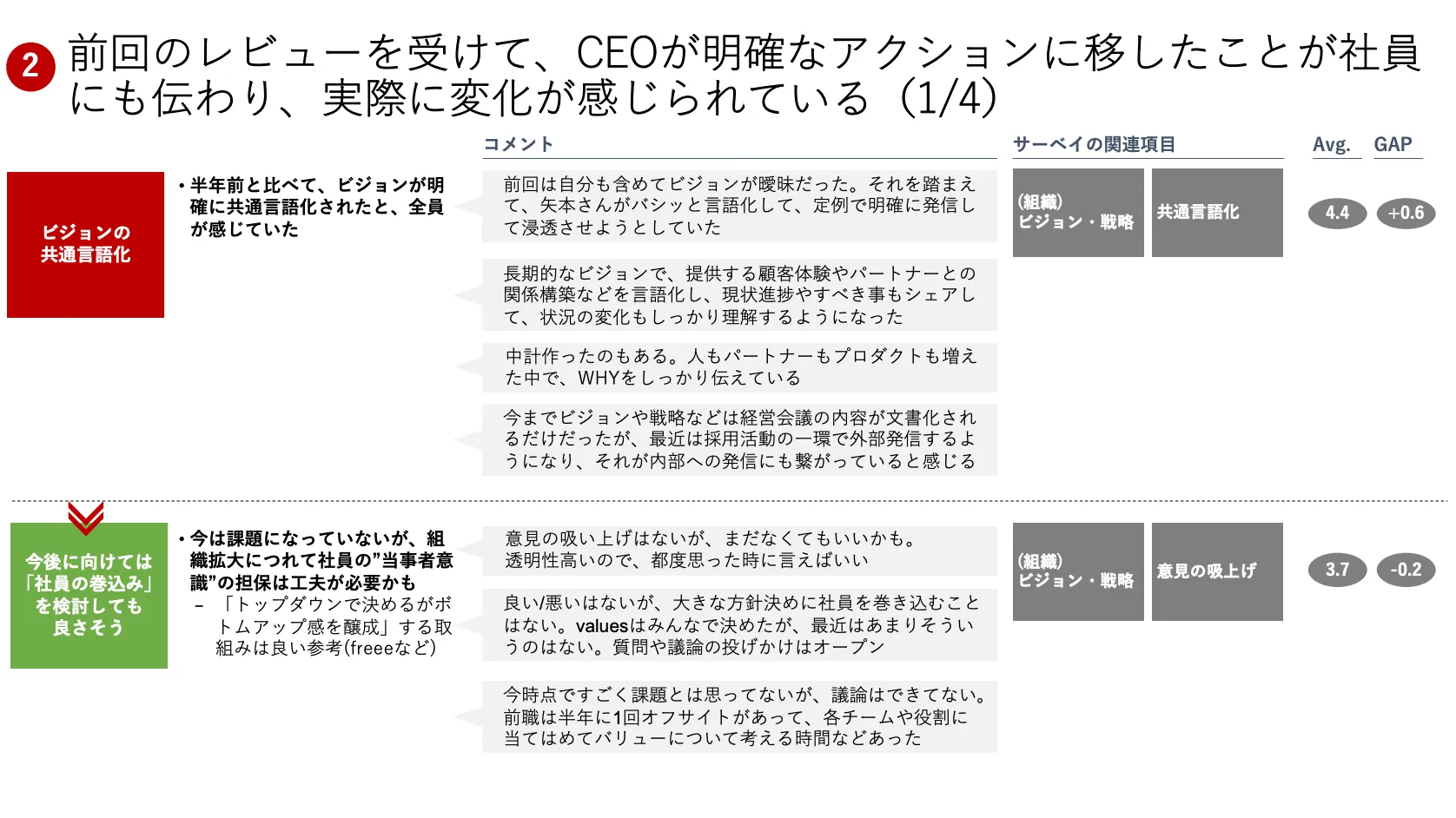
Aligning direction across many channels was a meaningful achievement. On the other hand, "bringing people along" had started surfacing as a concern — the headcount growth was making this harder.
The first-ever company offsite (held in April) was a direct response.
Inclusivity: first steps taken
On inclusivity (the main challenge from last review), we took significant action.
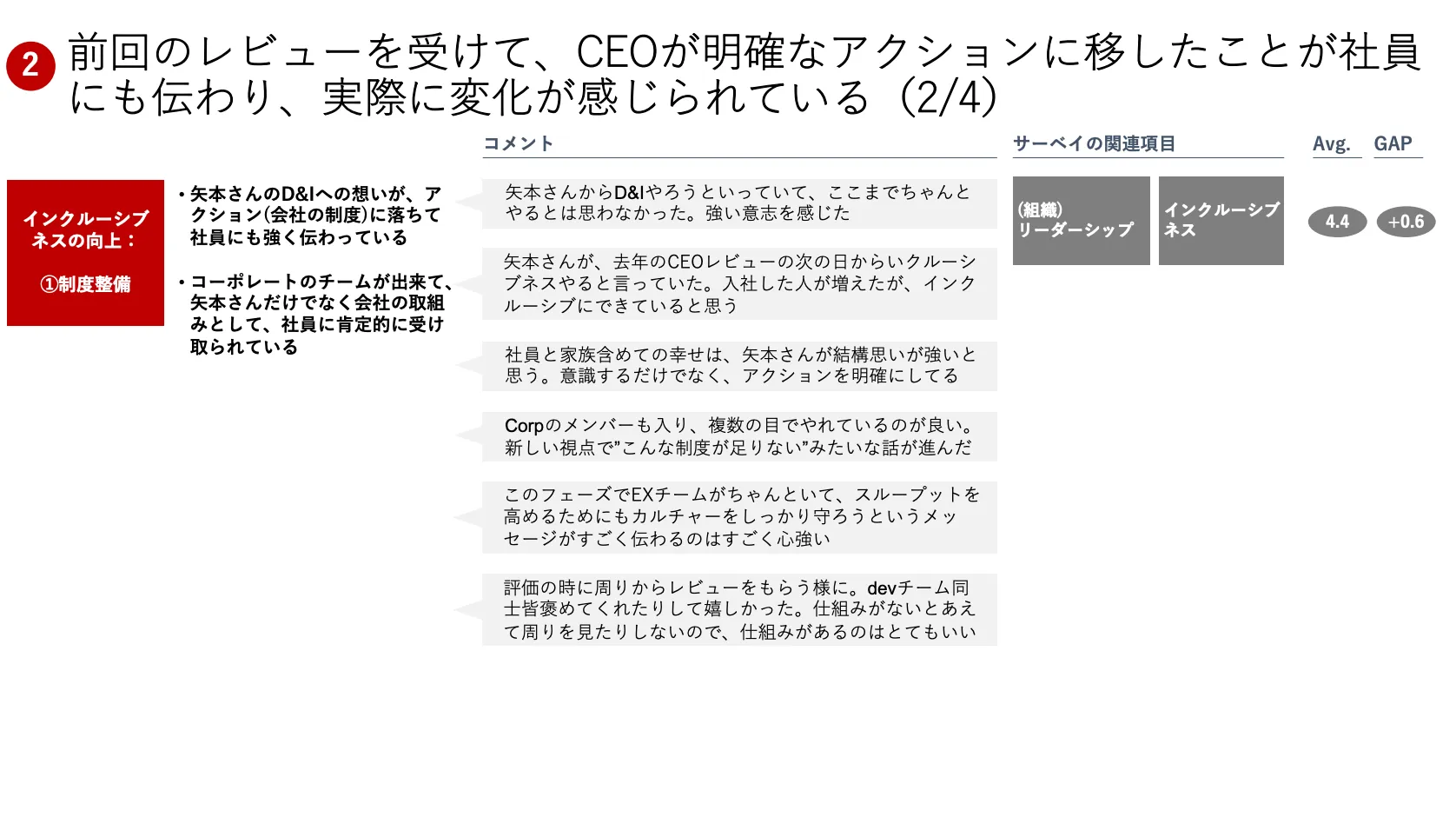
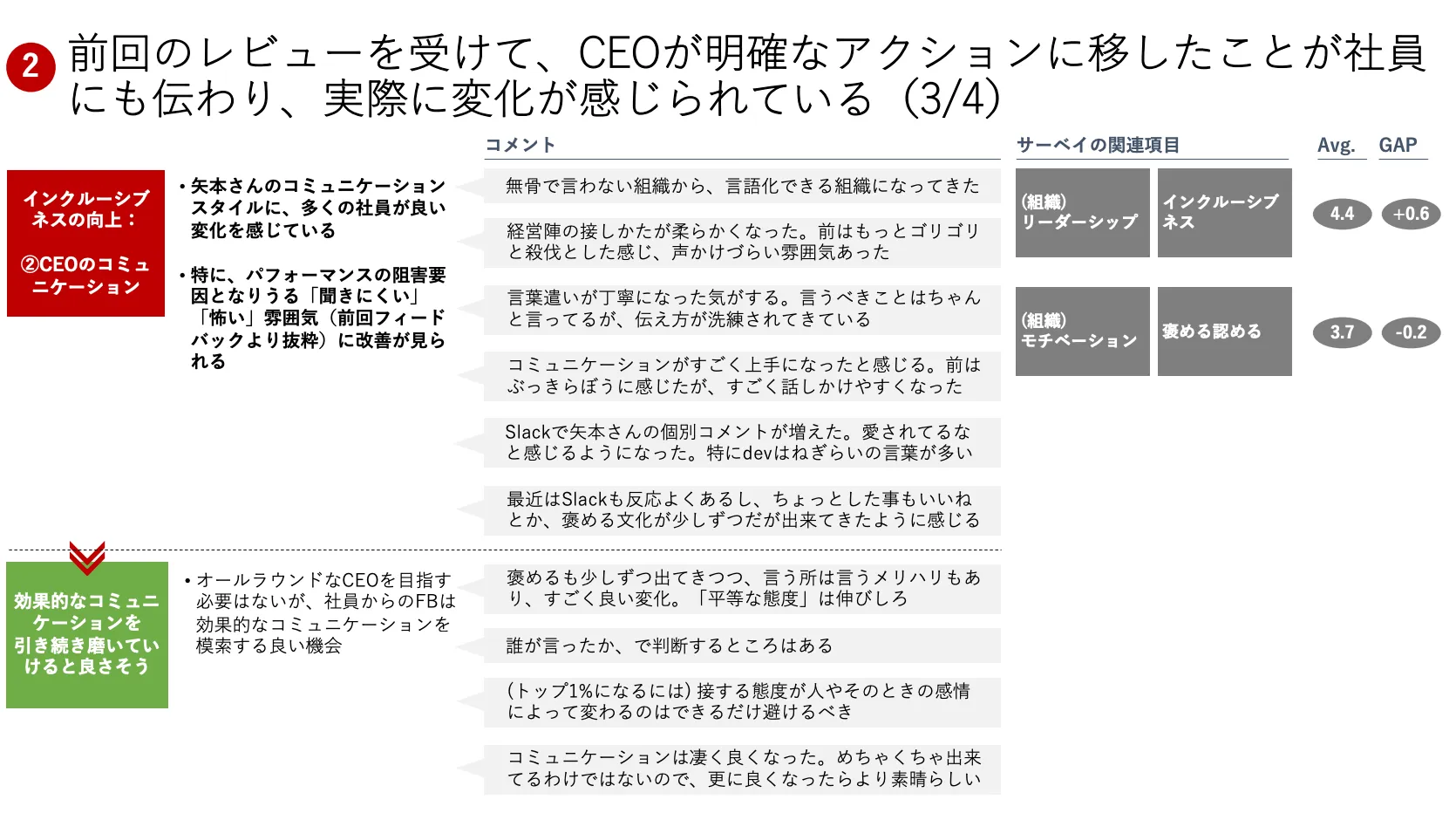
Our D&I policy was developed with real passion — driven by Ricchan, who brought her full conviction to the process, involving internal and external voices from the "why" up. The result is something that genuinely reflects 10X. Matsuo-san's joining and the formation of our EX (Employee Experience) team launched a whole new layer of people development: onboarding, mentoring, evaluation. And the "10X Benefits" package — comprehensive employee benefits designed for long-term wellbeing — was fully built out.
All of this is just the first step. Evolving the company-as-product continues.
Delegation progress
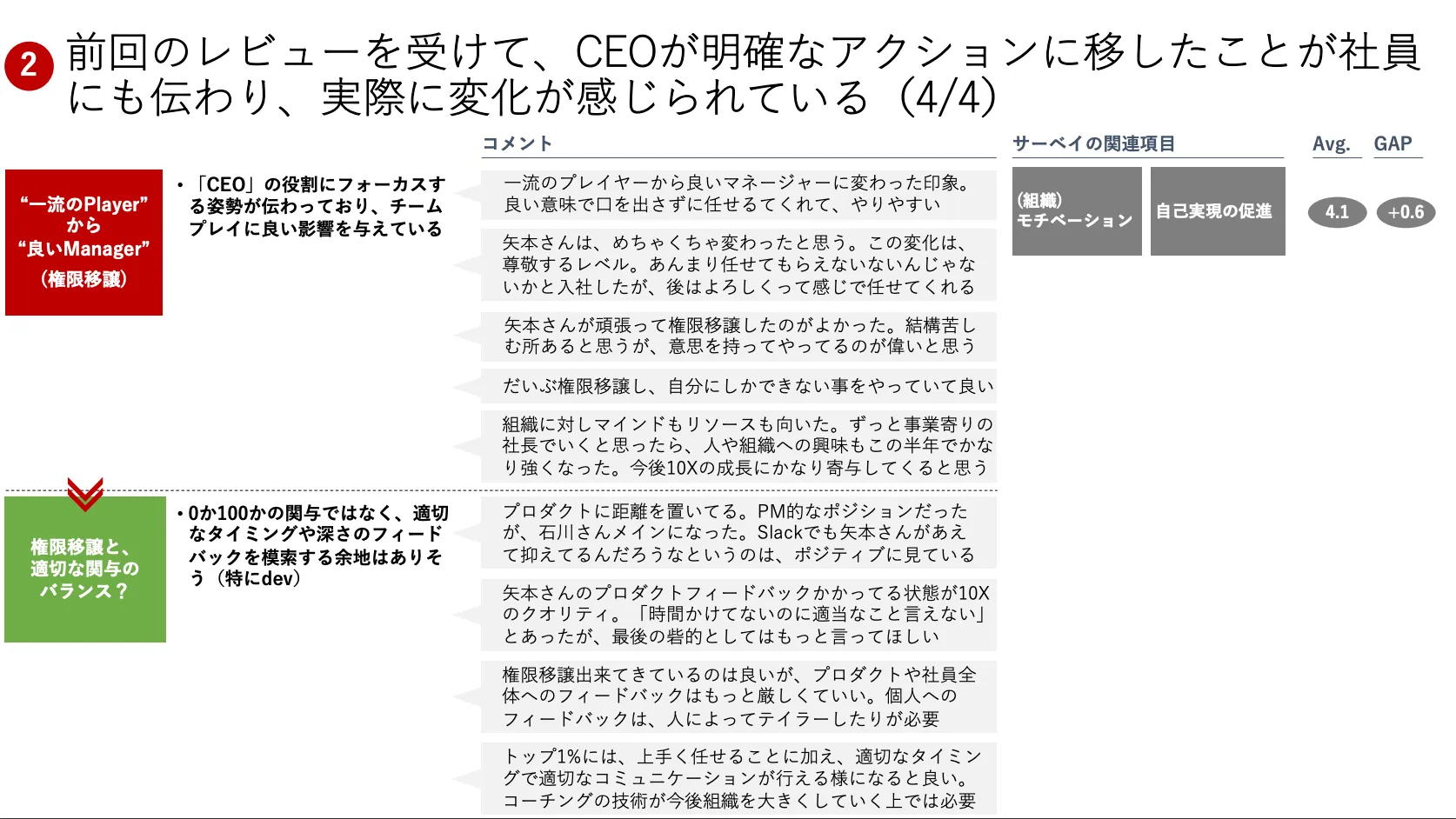
Delegation by itself is a meaningless question. It only makes sense in context of a more complex set of conditions: what business are we trying to build in the future? What team do we need right now to build it? What is the most difficult, uncertain, discontinuous role within that? And what's the gap between the ideal and reality? From that analysis you define the CEO's role and allocate authority accordingly.
This period, I handed off most of product management (which is in a "sharpening what to build" phase), and concentrated on: recruiting leverage (becoming a public face for hiring), building the BizDev and EX teams, maximizing PR penetration, and tightening grip on top-chain executive relationships in the industry. (Still too much.)
The handoff required codifying my former work and its mission, then reviewing only to maintain critical quality. What made it possible was that the conditions for delegation — organizational growth and business opportunity growth — finally aligned.
Delegation doesn't work if the receiving team can't absorb it. The team's development was the real growth.
Product feedback: the leverage point shifted
Because of all the above, team members felt my hands-on involvement in product details — features, UI, copy, margins — drop significantly compared to before. That's accurate.
But from my perspective, my product influence didn't weaken. It became larger. Stailer is built in partnership with partners' management and their customers. Most business opportunity originates from BizDev. My role now is to articulate "what kind of product does Stailer need to become to 10x retail" and feed that into product strategy — the Why and the What. At the same time, building a BizDev team that can give quality feedback to both product and partners is itself a major agenda.
From my vantage point, what changed is where I apply my product-centric thinking — not the depth of engagement.
3 / The discontinuous growth in business opportunity makes expanding organizational throughput urgent
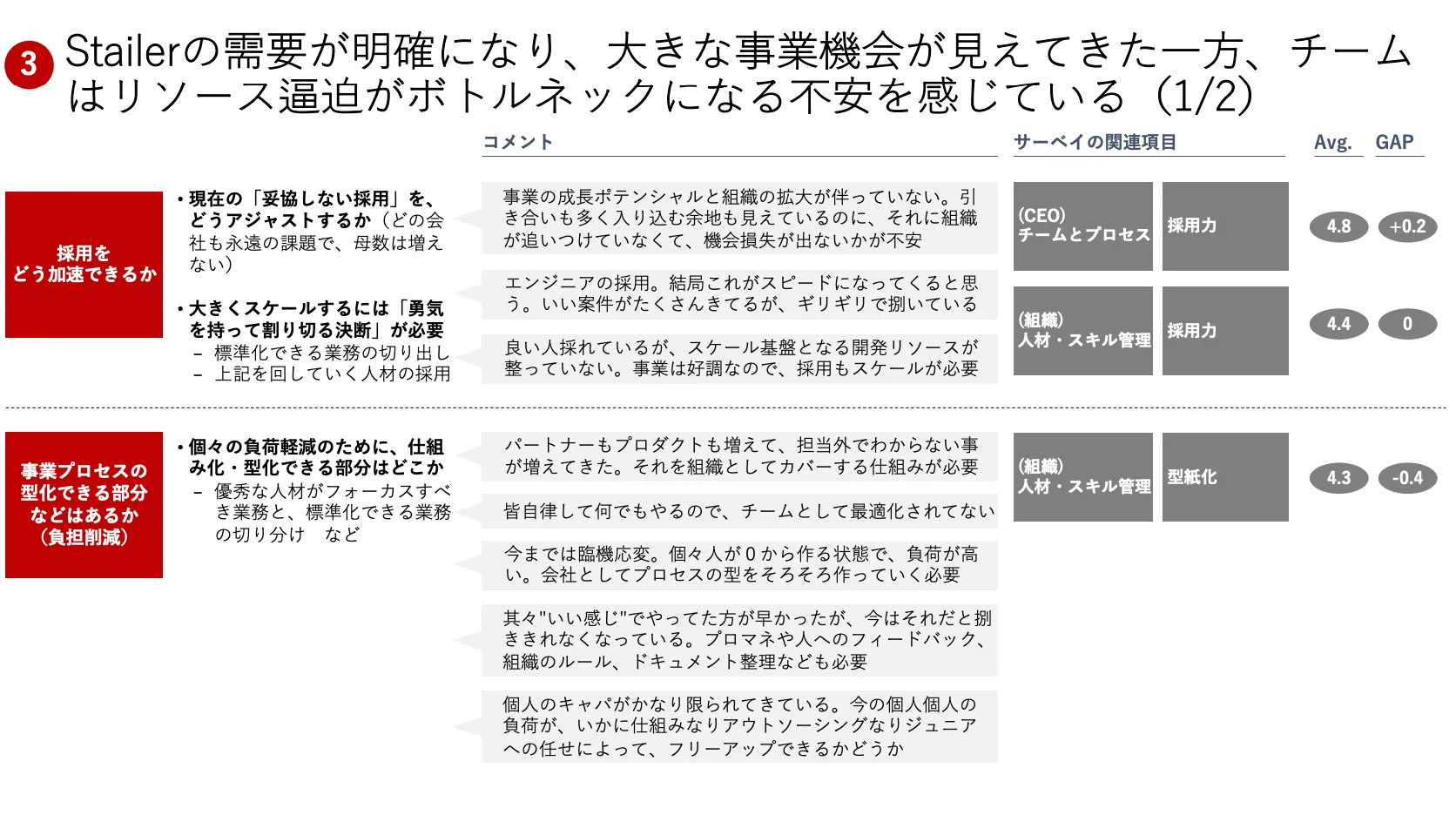
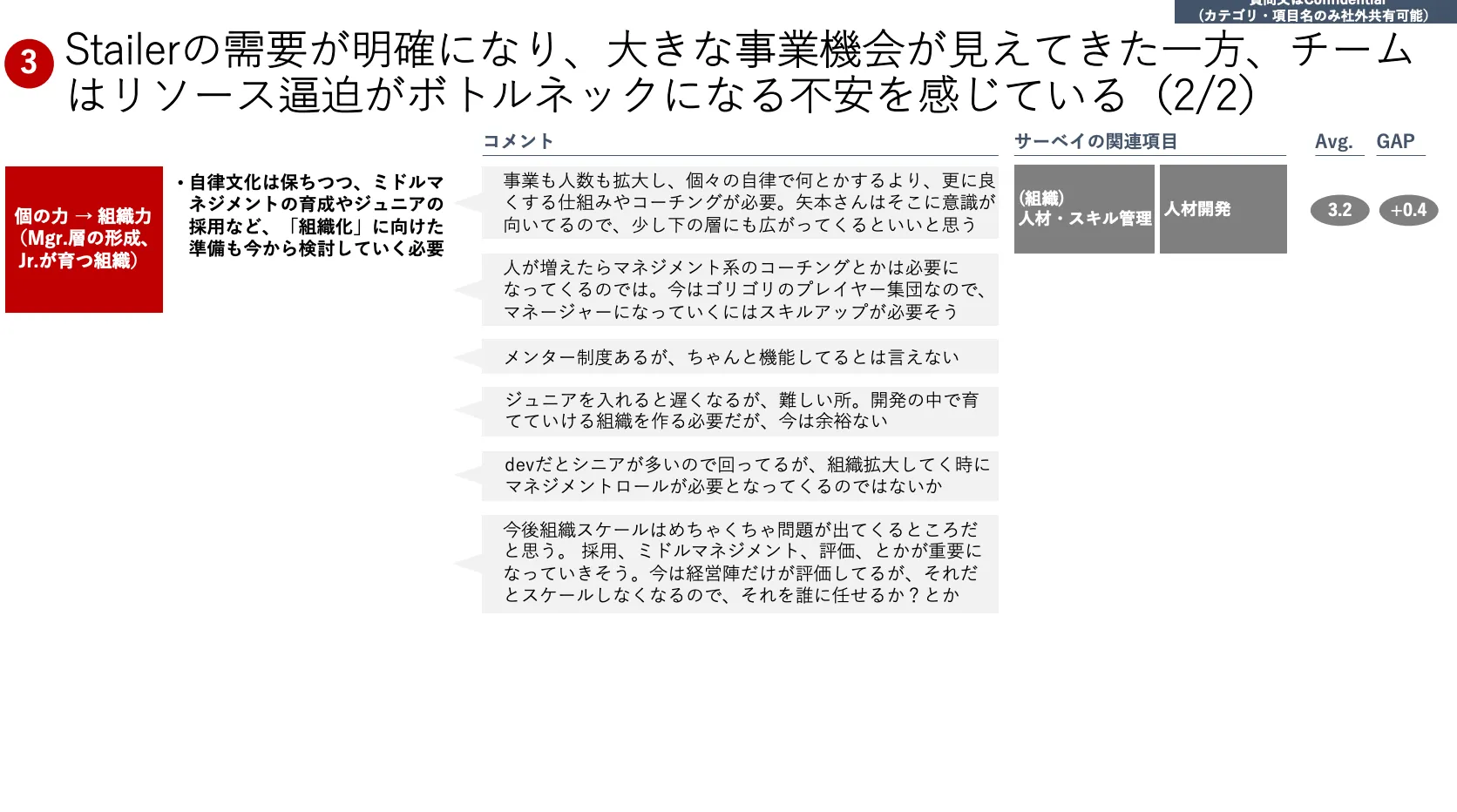
BizDev penetration made non-linear progress this period. The pipeline grew by multiples, and the product development issues required for launching partners have come into sharp focus.
Hiring, codifying processes, and developing people are all important — but the ultimate goal is growing organizational throughput proportionally to business opportunity growth. The three are means, not ends. Priority order:
- Further modularization of the product → clarifies the launch protocol (codification)
- Lower skill dependencies and time pressure → easier for new people to enter (development opportunity)
- Better bracketing of large and small issues → widens what we can hire for (recruiting)
All three take time, which is why we're planting seeds now. The number one company priority is the product team's throughput — we need to 10x it.
4 / Building information management infrastructure for scale
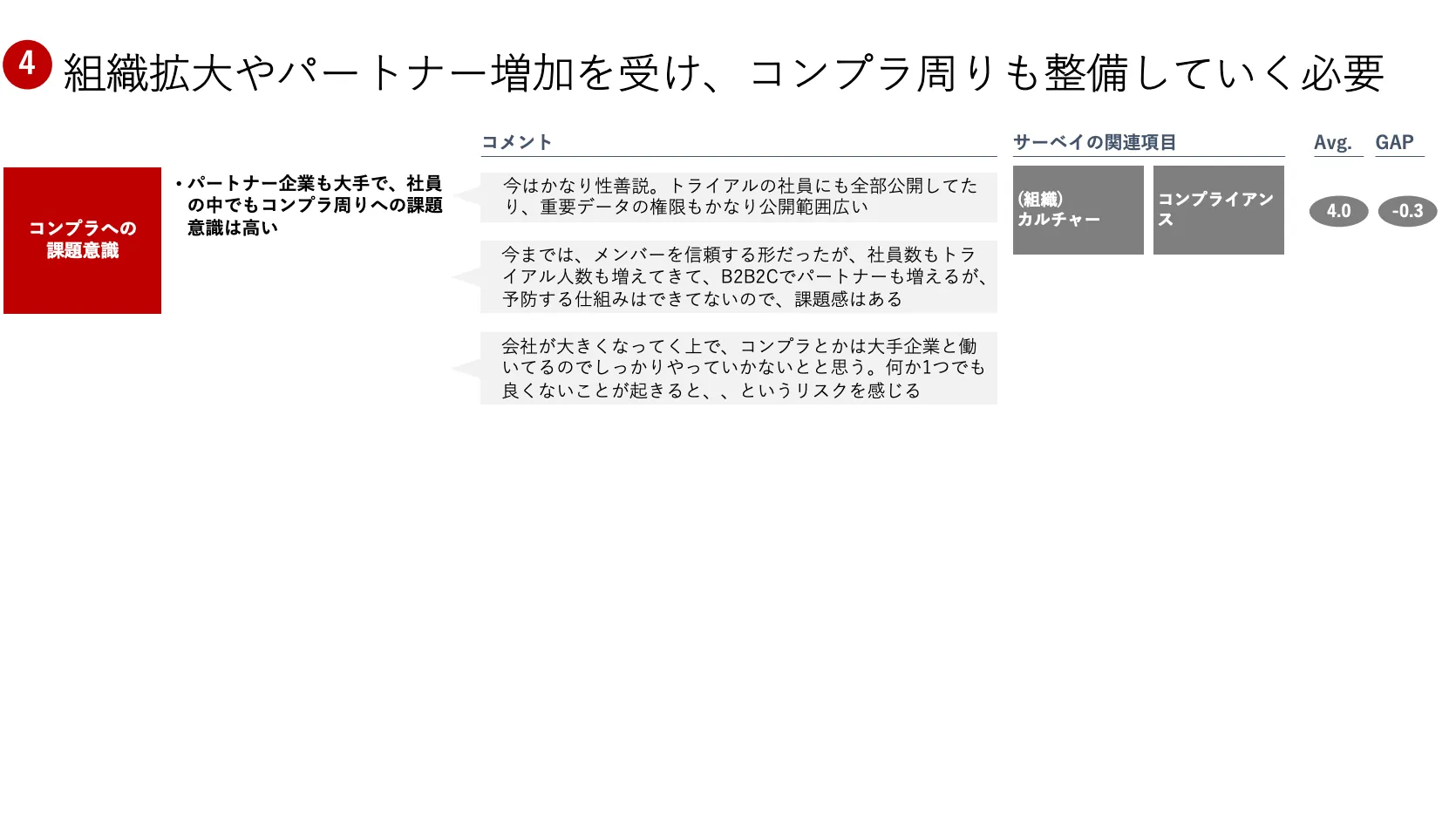
The feedback used the word "compliance" — but the real issue is building appropriate information management systems suited to our business responsibilities. We've treated this as urgent since late 2020.
The first priority: segment the security requirements for each type of information we handle (customer PII, partner confidential data, product analytics, partner proposals), and build systems capable of meeting those requirements.
We can't get there in one leap. For now, the minimum threshold is: no one-way mistakes. We'll prioritize from there. This is a shared effort.
5 / Creating more opportunities to draw out latent potential
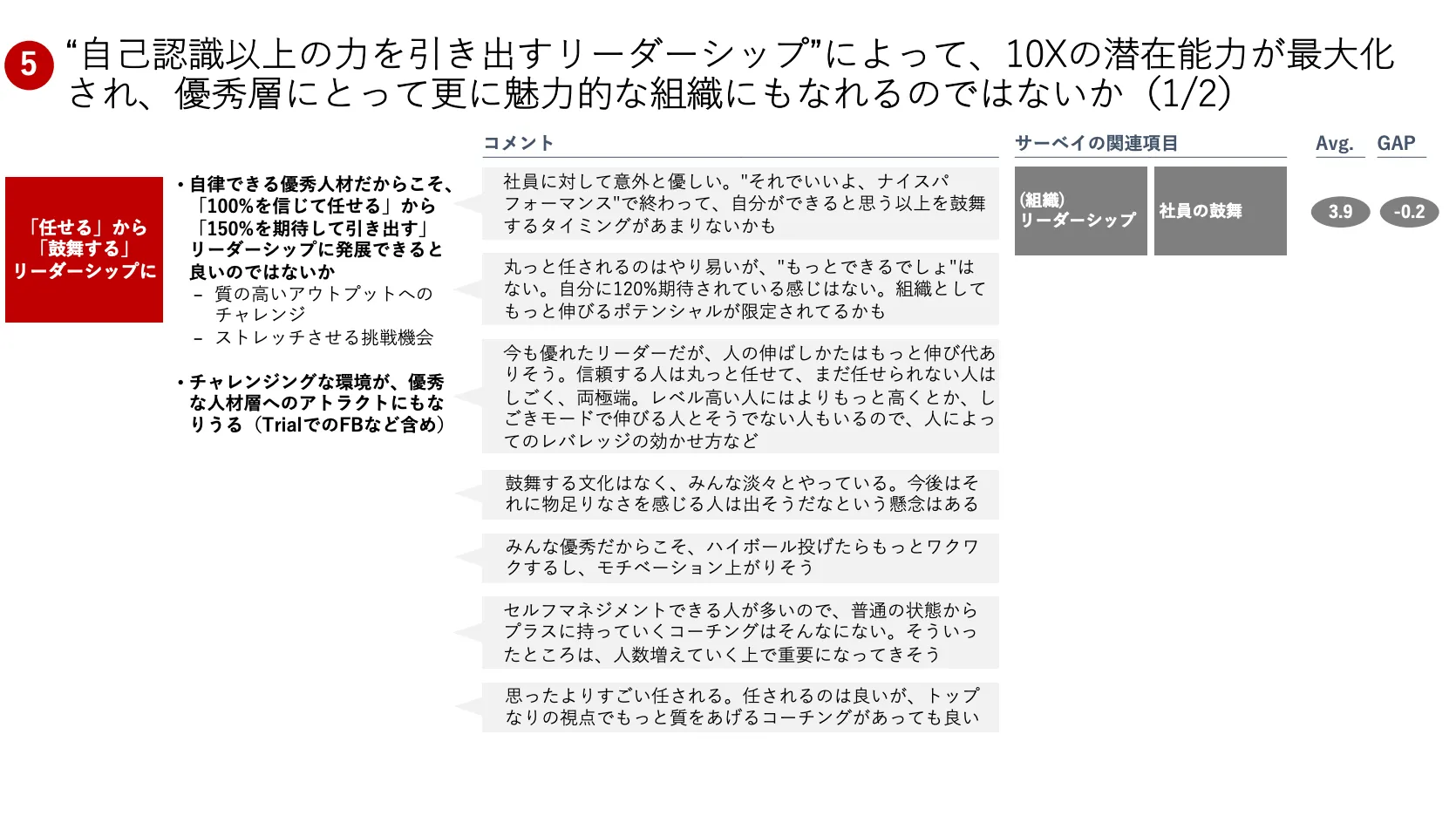
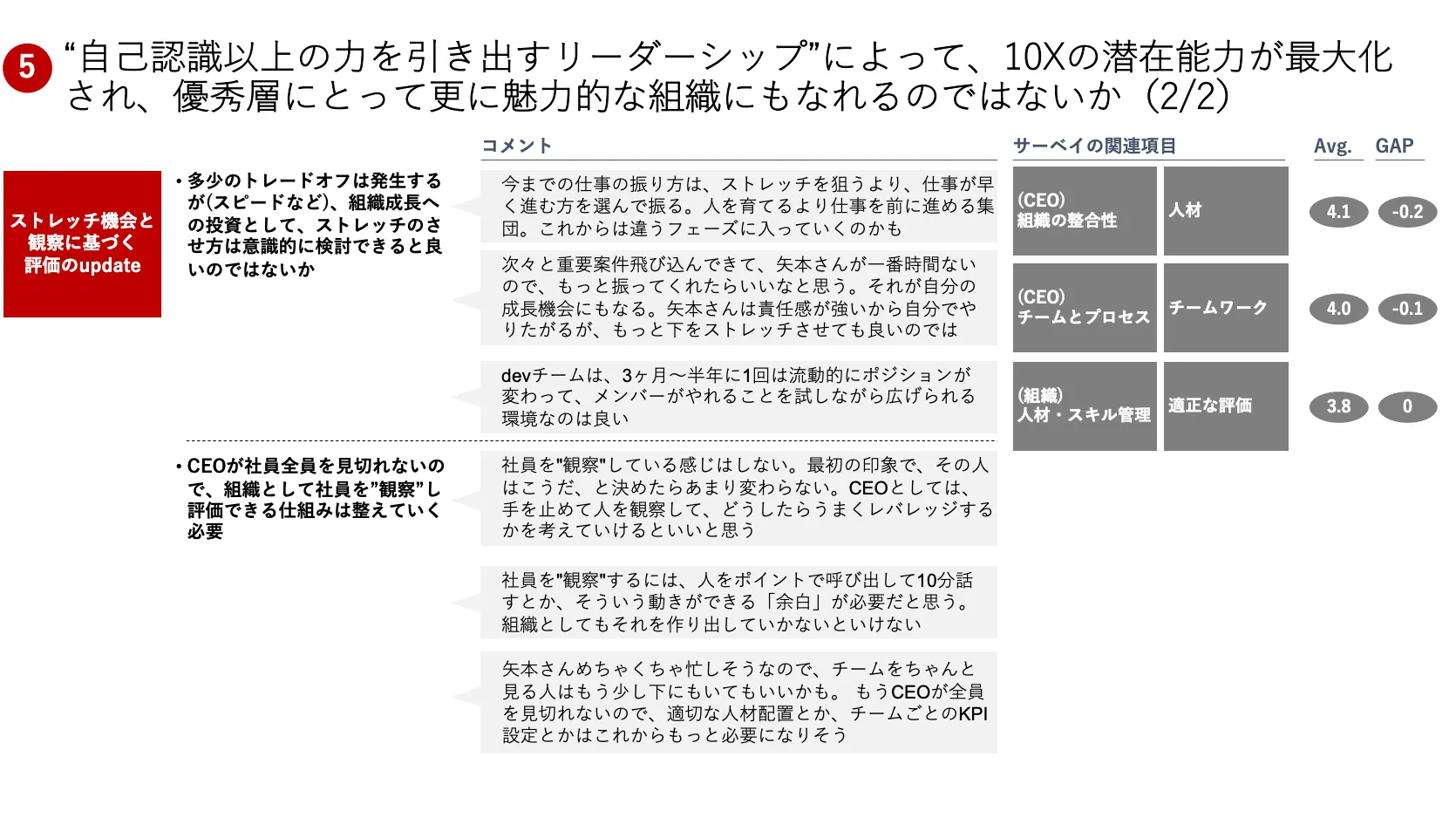
Words like "challenging," "150%," "stretch" appeared throughout. The energy and ambition are clear. But "what does it take to actually stretch to 150%?" deserves careful thought.
My view: there's no path other than accumulating the right match between individual and opportunity. To put it starkly: asking someone without relevant skills or experience to "rebuild Stailer from scratch" or "raise ¥3 billion at the optimal capital structure" produces neither results nor a 150% stretch. You need just-above-current-capability challenges, completed in series.
As CEO, I want to focus on allocating the right opportunities to the right people.
Another angle: we're in a phase where business growth velocity far exceeds individual growth velocity. With organizational throughput as the top priority, the stance still required of each person is: "pull the right opportunity from the issues in front of the company, use it to 10x our throughput, and grow yourself in the process."
6 / Not enough external stimulus?
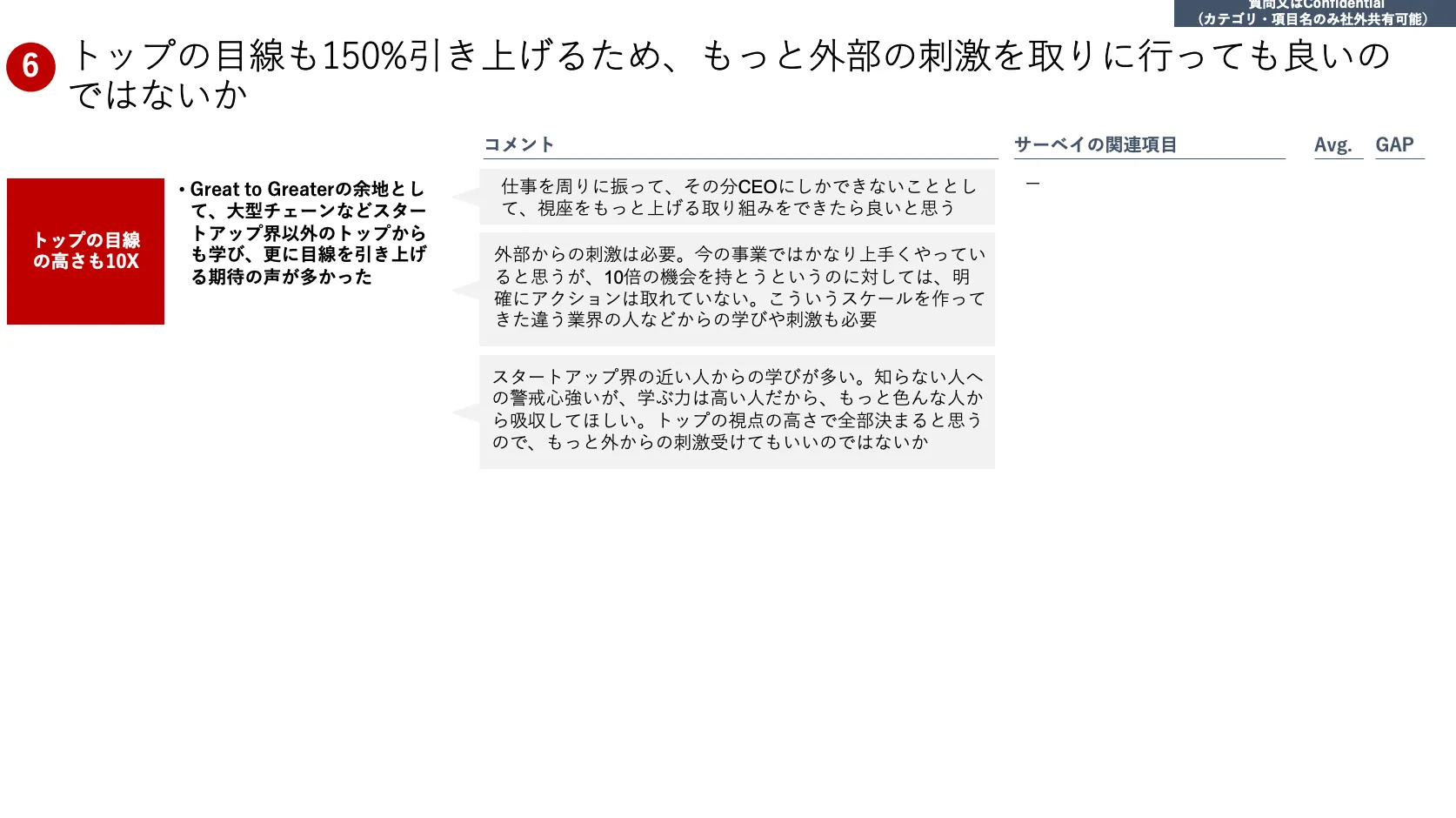
This one didn't resonate with me. This half-year I had a substantial volume of BizDev conversations with top chain executives domestically, as well as conversations with founders at more advanced stages. But did any of it non-linearly raise my perspective? No.
In my four years as CEO, what has actually elevated my thinking non-linearly has been one thing: decision-making opportunities with real stakes that touch the world. The business and organizational growth to create those opportunities is what I need.
So: the medium-term plan I drew up at year-end — I want to achieve it not in five years but in one. There are already further discontinuous challenges beyond that. I'm counting on you all.
7 / Free-form survey responses
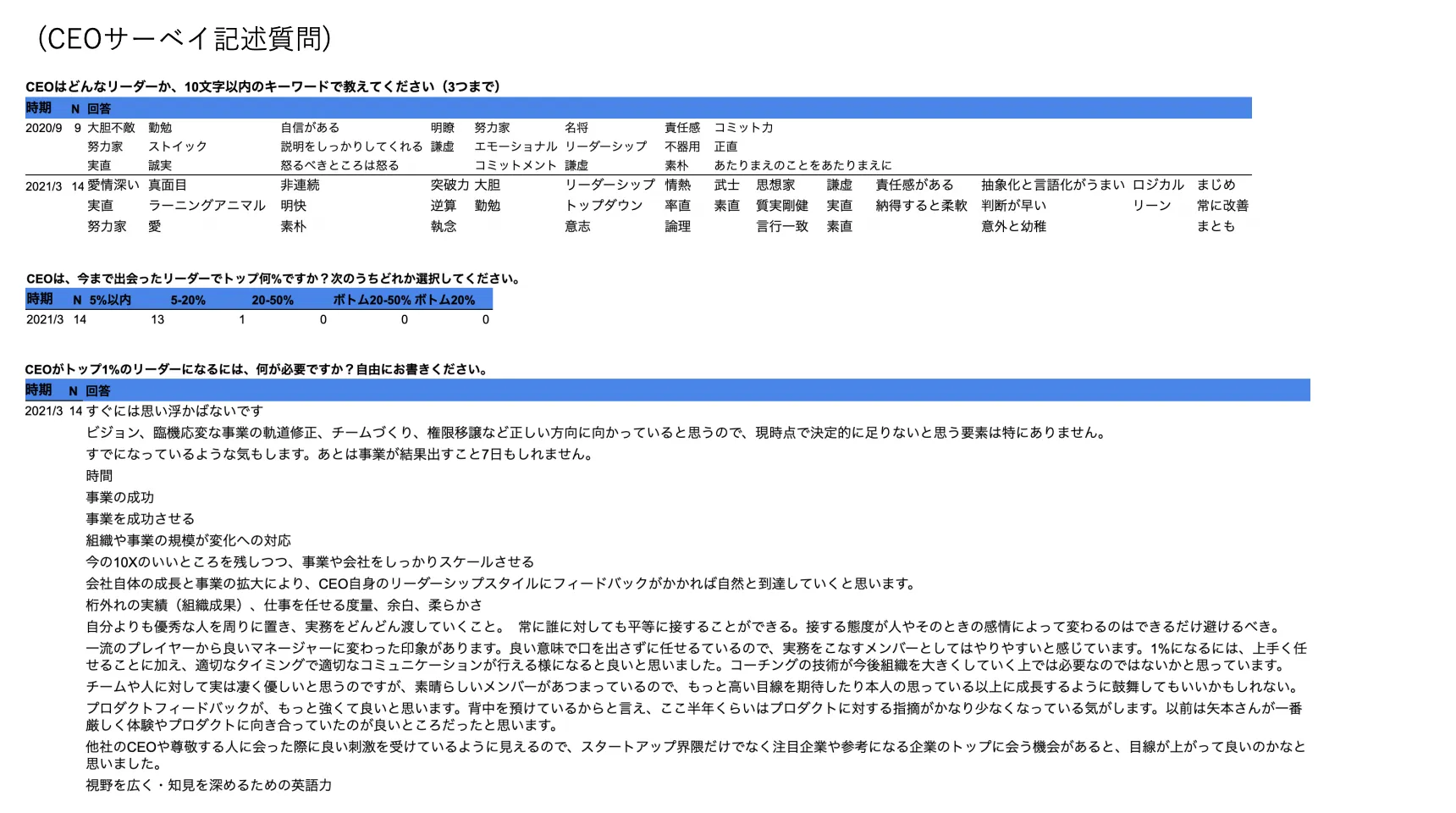
Very similar impressions to six months ago. "Discontinuous and straightforward" seems to be how I come across. That feels right.
Summary and Next Commitments
Three priorities:
- Against the three commitments from last period (clarifying direction, inclusivity, team building) — strengthen the trajectory we've built.
- The current company-wide challenge concentrates on product team strength and scale — this is the #1 priority and needs cross-company recalibration.
- As CEO: move toward an organization where I can optimize individual-to-opportunity matching and maximize opportunity provision for each person.
These are my commitments for the next six months. Full throttle.


Comments
Share your thoughts or questions. Comments are published after approval.
Write a comment